


The JCB 3CX is a versatile backhoe loader equipped with multiple hydraulic cylinders for digging, loading, steering, stabilization, and optional extendable dipper functions. Since these hydraulic cylinders have different bore diameters, rod diameters, strokes, and sealing configurations, there is no single hydraulic cylinder seal kit that can fit all cylinders on a JCB 3CX.
Selecting the correct JCB 3CX hydraulic cylinder seal kit requires identifying the cylinder location, checking the cylinder or seal kit part number, and, in some cases, measuring the piston rod and cylinder bore.
This guide explains the main hydraulic cylinders on the JCB 3CX, the common seals included in repair kits, how to identify the correct kit, and the key precautions to follow during hydraulic cylinder repair.
If you are looking for replacement seals, you can also browse FASeals’ JCB hydraulic seal kits or view the full range of hydraulic cylinder seal kits.
一. Common Hydraulic Cylinders on a JCB 3CX
A JCB 3CX uses several different hydraulic cylinders. Each performs a different function and may require a different seal kit.For this reason, a seal kit for the boom cylinder should not automatically be assumed to fit the dipper, bucket, stabilizer or loader cylinder.
1. Boom Cylinder
Controls the raising and lowering of the entire excavator boom and generally operates under the highest loads.
2. Dipper Cylinder
Controls the extension and movement of the excavator dipper arm.
3. Bucket Cylinder
Controls the curling, dumping, and digging movement of the rear excavator bucket.
4. Loader Lift / Bucket Cylinder
Controls the front loader bucket lifting and tilting functions.
5. Stabilizer Cylinder
Located on the left and right sides of the machine and used to support and stabilize the backhoe loader.
6. Steering Cylinder
Mounted on the front axle and used to control steering.
7. Extradig Cylinder
Machines equipped with an extendable dipper arm have an additional Extradig cylinder.
二. What Is Included in a JCB 3CX Hydraulic Cylinder Seal Kit?
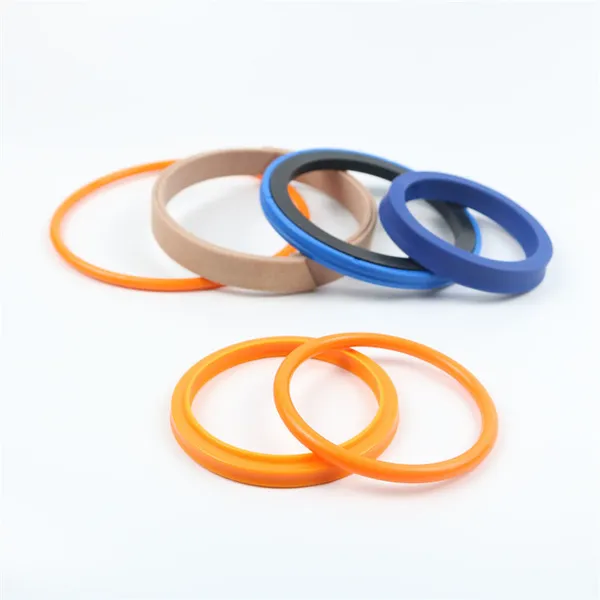
The exact contents vary according to the cylinder design, but a typical hydraulic cylinder repair kit contains several types of seals and guide components.
FASeals supplies hydraulic sealing products manufactured from materials including PU, NBR and PTFE for different hydraulic applications. You can learn more in the FASeals sealing materials guide.
1. Wiper Seal
Installed at the outermost end of the cylinder. It removes dirt, sand, mud, ice, and other contaminants from the piston rod and prevents them from entering the cylinder.
2. Rod Seal
The main pressure-retaining seal, usually a U-cup seal. It prevents hydraulic oil from leaking outward along the piston rod.
3. Buffer Seal
Located inside the rod seal. It helps absorb high-pressure shocks during extreme operating conditions and extends the service life of the primary rod seal.
4. Piston Seal
Installed around the outer circumference of the piston. It prevents hydraulic oil from bypassing between the high-pressure and low-pressure chambers inside the cylinder, which can otherwise cause cylinder drift or loss of power.
5. Wear Rings
Prevent direct metal-to-metal contact between the piston rod or piston and the cylinder barrel while providing support and guidance.
三. Key Identification Methods When Ordering
1. Identify the Cylinder Location
First determine exactly which hydraulic cylinder needs to be repaired. Providing a clear photo showing the cylinder’s installation location can help prevent many ordering mistakes.
2. Check the Cylinder Part Number and Nameplate
Check the cylinder for its part number and identification markings. An example of a JCB part number format is: 556/60032. Using the cylinder part number is one of the most reliable ways to identify the correct seal kit.
3. Measure the Seal and Cylinder Dimensions
If the part number cannot be found, use a vernier caliper to measure the piston rod seal dimensions, including the inside diameter (ID), outside diameter (OD), and height. Also measure the cylinder bore diameter.
四. Important Precautions When Replacing JCB 3CX Hydraulic Cylinder Seals
Correct parts are only half of a successful cylinder repair. Installation practices have a major effect on seal life.
1. Relieve Hydraulic Pressure Before Disassembly
- Hydraulic systems can retain pressure even after the engine has been switched off.
- Before disconnecting hydraulic lines:
- Park the machine on firm, level ground.
- Lower the loader bucket, backhoe and attachments to a safe position.
- Stop the engine.
- Follow the JCB service procedure for relieving residual hydraulic pressure.
- Move the hydraulic controls as specified by the manufacturer.
- Confirm that the circuit is depressurized before loosening any fitting.
Never loosen a hydraulic connection to “check” whether pressure remains. High-pressure hydraulic oil can cause serious injection injuries.
2.Keep the Hydraulic System Clean
Contamination is one of the biggest enemies of hydraulic seals.
Before removing hoses or fittings:
- Clean the surrounding area
- Mark each hose and connection
- Cap or plug open hydraulic lines immediately
- Keep the workbench and tools clean
- Prevent dirt from entering the cylinder
A new seal kit installed into a contaminated cylinder can fail prematurely.
3.Do Not Damage the Seal Grooves
When removing old seals or installing new ones, do not force them out with a sharp screwdriver. This may scratch the chrome-plated surface of the piston rod or damage the seal grooves. It is recommended to use dedicated non-metallic seal removal tools or seal installation tools.
4.Inspect the Piston Rod Before Installing New Seals
Before installation, carefully inspect the piston rod for scratches, corrosion, chrome peeling, and other surface damage. Defects on the piston rod surface can quickly damage a newly installed rod seal.
5.Inspect the Cylinder Barrel
Check the cylinder barrel for scratches, corrosion, and excessive wear. If the cylinder barrel is severely damaged, installing a new piston seal may temporarily reduce leakage but will not solve the underlying problem.
6.Use Clean, Compatible Hydraulic Oil or Lubricant During Installation
Some piston seals are made from relatively hard materials. Before installation, they can be soaked in clean hydraulic oil at approximately 60°C-80°C for several minutes to soften them and make installation into the seal groove easier.
7.Install Seals in the Correct Direction
- Piston rod seals, buffer seals and some piston seals have a specific pressure-facing orientation.
- Installing a seal backwards may lead to immediate leakage or premature failure.
- Before removing the original seals, photograph their orientation and installation sequence whenever possible.
8.Use the Correct Tightening Torque
- Cylinder piston nuts, gland components and retaining fasteners can be subjected to enormous cyclic loads.
- Always use the torque value and assembly procedure specified for the exact cylinder.
- If the service procedure specifies thread-locking compound, use the specified type and strength. Do not automatically apply medium- or high-strength threadlocker to every cylinder fastener.
- Incorrect torque or incorrect locking compound can create serious problems during operation or future servicing.
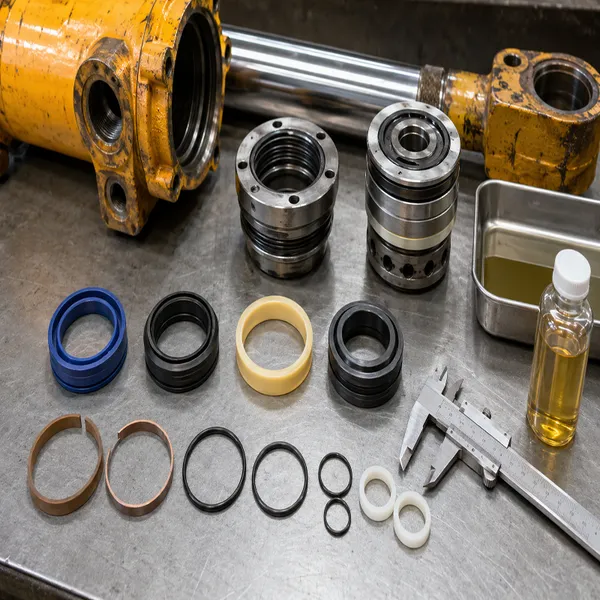
FASeals offers hydraulic cylinder seal kits and sealing components for construction machinery applications. You can browse available hydraulic seal kits and cylinder repair products or contact the FASeals team if you need assistance identifying a JCB cylinder repair kit.
Related posts

Volvo EC210 Hydraulic Cylinder Seal Kit: 7 Essential Tips
The Volvo EC210 series is a medium-sized crawler excavator widely used in earthmoving, road construction, foundation excavation, and bu...

Komatsu PC2000-8 Repair Kits: A Complete Guide for Backhoe and Loading Shovel Excavators
The Komatsu PC2000-8 is a large mining hydraulic excavator widely used in open-pit mines, quarries, large-scale earthmoving projects, a...

Furukawa Breaker Diaphragm: Structure, Function, Selection and Maintenance Guide
The Furukawa breaker diaphragm is installed inside the accumulator chamber. Its main function is to separate hydraulic oil from nitroge...