


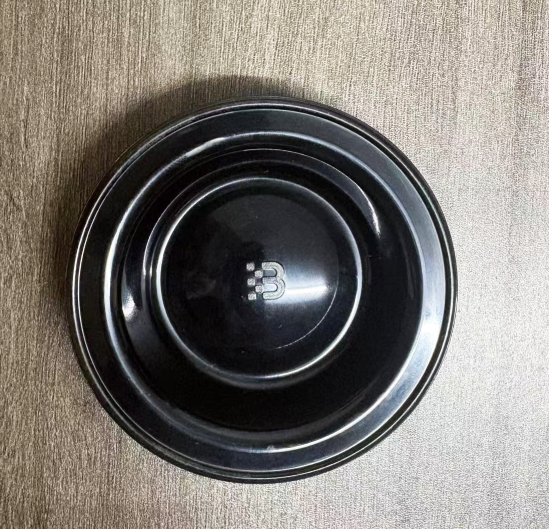
The Furukawa breaker diaphragm is installed inside the accumulator chamber. Its main function is to separate hydraulic oil from nitrogen gas and help maintain stable impact power.
Because hydraulic breakers operate continuously under high-frequency impact, high pressure, and strong vibration, the diaphragm repeatedly deforms during operation, potentially thousands of times per minute. This requires the material to provide both elasticity and wear resistance.
Once the diaphragm ages or cracks, hydraulic oil and gas may mix, causing weak breaker impact and resulting in equipment downtime.
In heavy-duty applications such as mining and tunnel construction, the reliability of the diaphragm directly affects operating efficiency.
Different hydraulic breaker models have different dimensions, piston structures, operating flow rates, and internal sealing configurations. Therefore, when selecting a diaphragm, the exact breaker model and installation position must be confirmed.
1.How Does a Furukawa Breaker Diaphragm Work?
Furukawa hydraulic breakers use the hydraulic system to drive the piston in high-speed reciprocating motion. The piston then strikes the tool, converting hydraulic energy into impact energy.
The basic working principle is:
Hydraulic pressure acts on the sealing lip → the sealing lip elastically deforms → the lip presses against the piston or cylinder surface → hydraulic oil leakage is reduced.
2.What Are the Main Functions of a Furukawa Breaker Diaphragm?
2.1 Maintain Hydraulic Pressure
This is one of the most important functions of the diaphragm.
When the breaker operates, the piston depends on stable high-pressure hydraulic oil to generate high-speed movement.
If the diaphragm or related seal becomes seriously worn, high-pressure oil may leak internally through the clearance between the piston and cylinder.
Possible symptoms include:
- Reduced impact force
- Abnormal impact frequency
- Reduced operating efficiency
- Increased hydraulic oil temperature
Therefore, the sealing condition directly affects the working performance of the hydraulic breaker.
2.2 Cushion Pressure Shocks
The internal pressure of a hydraulic breaker continuously changes as the piston moves at high speed.
At some sealing positions, the buffer ring / buffer seal works together with the main seal.
2.3 Control Hydraulic Oil Leakage
The diaphragm and related seals form a continuous sealing surface with the piston, cylinder, or other moving components.
If the sealing lip is damaged, possible problems include:
- External oil leakage
- Internal leakage
- Pressure loss
- Increased hydraulic oil consumption
Therefore, when a hydraulic breaker develops an oil leak, the sealing components are usually among the key parts to inspect.
2.4 Help Stabilize Piston Movement
Sealing components help maintain stable hydraulic conditions around the piston.
However, it should be noted that the main mechanical guiding function is usually provided by:
- Bush
- Guide Ring
- Wear Ring
- Slide Packing
Therefore, the diaphragm and related seals are part of the sealing system rather than the primary piston-guiding components.
2.5 Reduce Contamination Entering the Hydraulic System
Furukawa hydraulic breakers are commonly used in:
- Mining
- Quarrying
- Building demolition
- Road construction
- Earthmoving
These environments often contain large amounts of dust, sand, mud, and debris.
Dust seals and related sealing components help prevent external contaminants from entering the internal moving mechanism and protect the piston, bush, and cylinder.
3.Structural Features of the Furukawa Breaker Diaphragm
3.1 Sealing Lip
The sealing lip directly contacts the piston or cylinder surface.
Its design needs to balance:
Sealing Performance + Wear Resistance + Low Friction + Elastic Recovery
If the sealing lip is too tight, it may cause:
- Increased friction
- Higher temperature
- Rapid wear
If it is too loose, a reliable seal may not be maintained.
3.2 Cup-Shaped or U-Shaped Cross Section
Many hydraulic breaker dynamic seals use cup-shaped or U-shaped cross sections.
When hydraulic oil enters the pressure area inside the seal, the pressure pushes the sealing lip outward against the sealing surface.
This type of structure can therefore use system pressure itself to enhance sealing performance.
4.Common Materials for Furukawa Breaker Diaphragms
The diaphragm is a commonly used sealing component in industrial equipment.
Depending on material and application, it can generally be divided into the following types:
- Rubber Diaphragm: Good elasticity, suitable for general sealing applications
- Polyurethane Diaphragm: High wear resistance, suitable for heavy-duty applications
- Silicone Diaphragm: Good high-temperature resistance, suitable for special operating conditions
Applications
Different types of diaphragms are suitable for different operating conditions:
- Standard Type: General-purpose design suitable for most conventional equipment
- Heavy-Duty Type: Improved sealing performance for high-pressure environments
- Special-Shaped Type: Designed for specific equipment and special sealing requirements
Selection Factors and Precautions
When selecting a diaphragm, consider the following key factors:
- Operating temperature range
- Chemical properties of the contacting medium
- Equipment operating frequency and speed
- Installation space limitations
5.How to Choose a Furukawa Breaker Diaphragm?
Confirm the Exact Model,Furukawa has many different hydraulic breaker models.
5.1 Older FRD F Series
| Model | Breaker Weight | Tool Diameter | Recommended Carrier Weight | Operating Flow |
|---|---|---|---|---|
| F1 | 43 kg | 36 mm | 1.0–1.5 t | 12–20 L/min |
| F2 | 58 kg | 45 mm | 1.5–2.5 t | 16–30 L/min |
| F3 | 81 kg | 52 mm | 2.5–3.5 t | 25–40 L/min |
| F4 | 106 kg | 60 mm | 3.5–4.5 t | 32–48 L/min |
| F5 | 152 kg | 68 mm | 4.5–5.5 t | 42–62 L/min |
| F6 | 195 kg | 75 mm | 5.5–6.5 t | 50–90 L/min |
| F9 | 300 kg | 90 mm | 6.5–9.0 t | 65–110 L/min |
5.2 Fx Series
Fx15 / Fx25 / Fx35 / Fx45 / Fx55 / Fx125 / Fx175 / Fx225 / Fx275 / Fx375 / Fx475 / Fx800 / Fx1070
5.3 Fxa Series
Fx15a / Fx25a / Fx35a / Fx45a / Fx55a
Different models may have different:
- Piston diameters
- Cylinder dimensions
- Operating flow rates
- Sealing structures
- Seal dimensions
5.4 Provide the Old Seal Dimensions
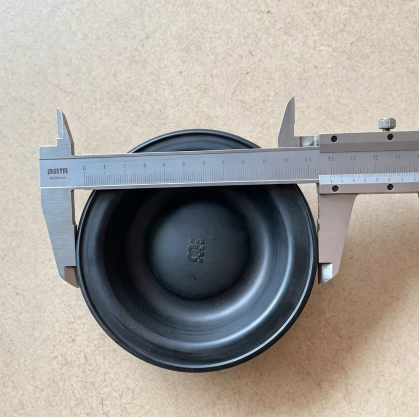
Use a vernier caliper to measure:
- Outside Diameter
- Inside Diameter
- Height
- Lip Width
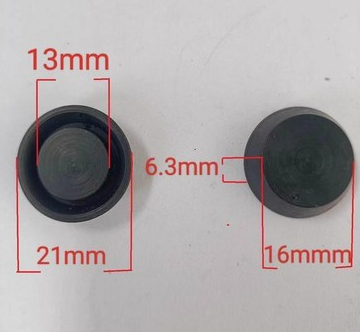
5.5 Provide Cross-Section Photos of the Seal
The cross section of the seal is very important.
Even if two seals have the same outside and inside diameters, they cannot necessarily be interchanged if their cross-sectional structures are different.
It is recommended to provide photos of:
- Front view
- Side view
- Cross section
- Installation groove
6.What Should Be Considered When Installing a Furukawa Breaker Diaphragm?
Thoroughly Clean Before Installation
Clean the following parts:
- Seal Groove
- Piston
- Cylinder
- Installation Tools
Any metal particles, sand, or fragments from old seals may damage the new diaphragm or seal.
Lubricate with Clean Hydraulic Oil
Before installation, apply a suitable amount of clean hydraulic oil that is compatible with the hydraulic system.
This helps reduce dry friction during initial operation.
Do Not Use Sharp Tools for Installation
Using screwdrivers or other sharp tools to force the seal into position can easily cause:
- Scratches
- Cuts
- Deformation of the sealing lip
It is recommended to use a suitable Seal Installation Tool.
7.How Often Should a Furukawa Breaker Diaphragm Be Inspected?
The inspection interval depends on:
- Daily operating hours
- Impact frequency
- Working load
- Hydraulic Oil Temperature
- Dust Conditions
- Oil Cleanliness
- Maintenance Quality
For mining, quarrying, and other continuous heavy-duty applications, the inspection interval should be shortened appropriately.
8.Conclusion
The Furukawa breaker diaphragm is an important component in the hydraulic sealing system of a hydraulic breaker.
These sealing components mainly help to:
Maintain hydraulic pressure, reduce hydraulic oil leakage, withstand high-speed reciprocating movement, cushion local pressure shocks, and protect internal hydraulic components.
When selecting a Furukawa breaker diaphragm, you should not rely only on appearance.
You can provide FASeals with the hydraulic breaker model, old seal dimensions, and clear cross-sectional photos so that the correct diaphragm or sealing component can be accurately matched.
Related posts

Volvo EC210 Hydraulic Cylinder Seal Kit: 7 Essential Tips
The Volvo EC210 series is a medium-sized crawler excavator widely used in earthmoving, road construction, foundation excavation, and bu...

Komatsu PC2000-8 Repair Kits: A Complete Guide for Backhoe and Loading Shovel Excavators
The Komatsu PC2000-8 is a large mining hydraulic excavator widely used in open-pit mines, quarries, large-scale earthmoving projects, a...
Furukawa Breaker Diaphragm: Structure, Function, Selection and Maintenance Guide
The Furukawa breaker diaphragm is installed inside the accumulator chamber. Its main function is to separate hydraulic oil from nitroge...