


A leaking hydraulic cylinder does not always mean that the entire cylinder needs to be replaced. In many cases, the problem can be repaired by replacing worn rod seals, piston seals, wipers, O-rings, backup rings, and other sealing components.
The challenge is identifying the correct hydraulic cylinder seal kit.
Two cylinders may look almost identical from the outside but use different rod diameters, bore sizes, gland designs, piston grooves, or seal profiles. Even cylinders installed on the same excavator can require completely different seal kits.
For this reason, selecting a seal kit only by machine model or by visually comparing the old seals can easily result in the wrong parts.
This guide explains how to identify the correct hydraulic cylinder seal kit using the machine model, cylinder position, part number, dimensions, old seal samples, and operating conditions.
1.Why the Correct Hydraulic Cylinder Seal Kit Matters
A hydraulic cylinder converts hydraulic pressure into linear movement. Pressurized oil acts on the piston inside the cylinder barrel, moving the piston and piston rod to lift, push, pull, tilt, steer, or position equipment.
The sealing system keeps hydraulic oil in the correct pressure chambers while preventing external leakage and contamination.
Different seals perform different jobs:
| Seal Component | Main Function |
|---|---|
| Rod Seal | Prevents hydraulic oil from leaking along the piston rod |
| Piston Seal | Separates pressure between the two sides of the piston |
| Wiper / Dust Seal | Removes dirt, mud, moisture, and debris from the rod |
| Buffer Seal | Helps protect the rod seal from pressure spikes |
| Wear Ring / Guide Ring | Guides the piston or rod and reduces metal-to-metal contact |
| O-Ring | Provides static sealing between fixed components |
| Backup Ring | Supports seals and helps prevent extrusion under pressure |
| Gland Seal | Seals between the gland/head and cylinder barrel |
Because the rod, piston, gland, and barrel have different dimensions and groove designs, the replacement seals must match the actual cylinder.
A seal that is only slightly different in diameter, height, profile, or material may leak, generate excessive friction, become damaged during installation, or fail prematurely.
2.Identify the Machine Brand and Complete Model
Start with the equipment itself.
Record the complete manufacturer and machine model, such as:
- Komatsu PC200-6
- Caterpillar 320D
- Hitachi ZX200-3
- Volvo EC210B
- JCB 3CX
Avoid providing only a general family name such as “CAT 320” or “PC200.”
Machines within the same model family can use different cylinders depending on production year, serial-number range, boom configuration, attachment specification, or regional version.
Whenever possible, also provide the machine serial number.
However, the machine model should normally be treated as the starting point, not the final seal-kit identification.
2. Confirm Which Hydraulic Cylinder You Are Repairing
This is one of the most important steps.
A single machine may contain many hydraulic cylinders, and each cylinder can use a different seal kit.
For example, an excavator may have a boom cylinder, arm cylinder, bucket cylinder, blade cylinder, offset cylinder, or other auxiliary cylinders.
Even when the boom, arm, and bucket cylinders are installed on the same excavator, their bore diameters, piston rod diameters, strokes, pistons, glands, and sealing systems are normally different.
Therefore:
“Seal kit for PC200-6” is not enough information.
A much better description is:
“Boom cylinder seal kit for Komatsu PC200-6.”
Better still:
“Boom cylinder seal kit for Komatsu PC200-6, cylinder assembly number XXXXX.”
Correctly identifying the cylinder position greatly reduces the possibility of receiving the wrong kit.
3. Find the Hydraulic Cylinder Part Number
The cylinder assembly part number is usually one of the best ways to identify the correct hydraulic cylinder seal kit.
Depending on the equipment manufacturer, the number may be found on a cylinder identification plate, stamped into the cylinder, shown in the machine parts manual, listed in an EPC, or recorded on previous repair documents.
When a cylinder part number is available, FASeals can cross-reference it with the corresponding repair kit or seal kit whenever application data is available.
4.Check for an Existing Seal Kit Part Number
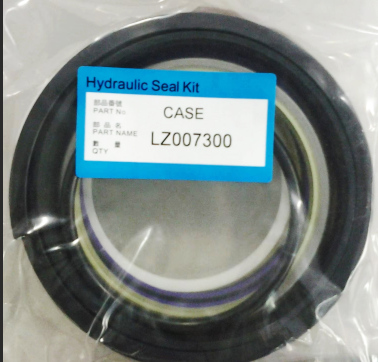
If the cylinder has been repaired before, you may already have the easiest identification information: the seal kit part number.
Check the old packaging, invoice, maintenance record, service manual, or equipment parts catalog.
OEM seal kit numbers are especially useful because they identify a sealing set rather than just the cylinder.
When sending a seal kit number, include the equipment model and cylinder position as additional confirmation. This is useful because aftermarket cross-reference numbers and superseded OEM numbers can sometimes cover more than one application.
5.Measure the Piston Rod Diameter
If no reliable part number can be found, physical measurements become much more important.
Begin with the piston rod diameter.
Measure across the chrome-plated rod using a vernier caliper or micrometer. Do not estimate the measurement with a ruler.
The rod diameter is especially important when identifying the rod seal, wiper seal, buffer seal, rod guide, and related gland components.
Measure an undamaged section of the rod. Heavy chrome wear, rust, scoring, or previous re-machining can affect the reading.
For example, a cylinder with a 70 mm rod and another with a 75 mm rod may look almost identical from a distance but require completely different rod-side seals.
6.Measure the Old Seals
When no part number can be identified, the old seals themselves can provide useful information.
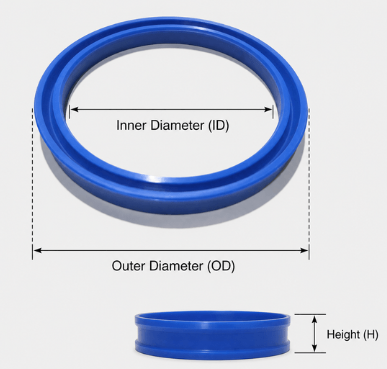
For each seal, record:
| Measurement | Meaning |
|---|---|
| ID | Inside Diameter |
| OD | Outside Diameter |
| H / W | Seal Height or Width |
| Groove Width | Width of the seal groove |
| Groove Diameter | Diameter at the groove |
| Seal Profile | Cross-sectional design of the seal |
A typical seal may therefore be described as:
Rod seal : 70*85 *9 mm,Backup ring 70*80*1.9
However, dimensions alone are not always enough.
Two seals with the same ID, OD, and width can have different lip geometry, pressure direction, energizing elements, material, or application.
Whenever possible, keep the old seal intact until the replacement has been confirmed.
Do not stretch, cut, or discard the old seals immediately after disassembly.
7.Check the Seal Profile and Installation Position
Hydraulic seals should also be identified by where they were installed and how they were oriented.
For example, a rod seal and a wiper may have similar outside diameters because both fit inside the cylinder gland, but they perform completely different functions.
Likewise, piston seals may use different constructions such as compact seals, U-cup designs, PTFE-based sealing elements, or multi-piece assemblies.
Before removing the old seals, photographing the gland and piston from several angles can make identification much easier.
Pay particular attention to pressure-facing lips, backup rings, energizer O-rings, wear rings, seal stacking order, and the direction in which each seal is installed.
This information is especially useful when the old seals no longer have readable markings.
8.Measure the Seal Grooves When the Old Seals Are Damaged
Sometimes the removed seals are too worn, broken, swollen, hardened, or deformed to measure accurately.
In this situation, measure the machined seal grooves instead of relying entirely on the old seal.
The groove dimensions can often provide more reliable information because the metal components normally retain their original dimensions unless they have been damaged or modified.
Measure the piston grooves and gland grooves carefully and record the width, diameter, and location of each sealing position.
This approach is particularly useful for older machines, custom hydraulic cylinders, discontinued equipment, and cylinders that may have been rebuilt with non-original components.
9.Do Not Identify a Seal Kit by Appearance Alone
Many hydraulic cylinder seals look similar.
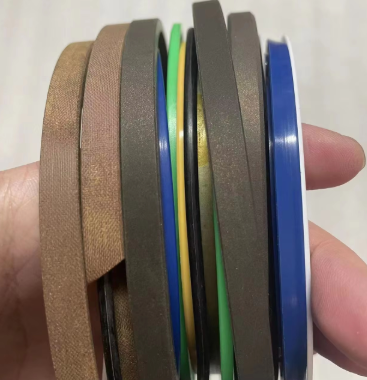
A black O-ring is not automatically the same as another black O-ring. A blue, green, brown, or black rod seal cannot be identified reliably by color alone.
Color can vary between manufacturers and production batches, and similar-looking seals may use different materials.
The same applies to complete seal kits.
Two kits placed next to each other may contain a similar number of seals but still differ in critical dimensions or profiles.
Visual comparison is useful as supporting evidence, but it should not replace part numbers and accurate measurements.
10.Confirm the Cylinder Type
The cylinder design can also affect seal-kit identification.
A conventional double-acting cylinder uses hydraulic pressure for both extension and retraction. A single-acting cylinder uses hydraulic pressure primarily in one direction, while the return movement may depend on gravity, a load, or another mechanism.
Telescopic cylinders are more complex because multiple stages may have their own sealing and guiding components.
If you are sourcing seals for a telescopic, steering, stabilizer, steering axle, outrigger, lift, tilt, or other specialized cylinder, tell the supplier exactly what type of cylinder is being repaired.
Do not assume that a general-purpose seal kit will cover every cylinder design.
11.Consider Pressure, Temperature, Hydraulic Fluid, and Environment
Correct dimensions are essential, but dimensions alone do not determine whether a seal is suitable.
Seal material must also be compatible with the working conditions.
Common hydraulic sealing materials include polyurethane (PU), nitrile rubber (NBR), PTFE-based materials, and fluoroelastomer (FKM), along with engineered combinations used in multi-piece sealing systems.
Material selection may be affected by operating pressure, temperature, hydraulic fluid, rod speed, pressure spikes, contamination, duty cycle, and exposure to mud, dust, water, chemicals, or abrasive materials.
For normal heavy-equipment repair, matching the original seal specification is usually preferable.
For unusually high temperatures, aggressive fluids, high pressure, severe contamination, or modified hydraulic systems, provide the operating conditions before selecting an alternative seal material.
12.What If You Cannot Find the Cylinder Part Number?
Do not worry if the identification plate is missing or the cylinder number is unreadable.
A hydraulic cylinder seal kit can often still be identified from a combination of information.
Send as much of the following as possible:
- Machine brand, complete model, and serial number
- Cylinder position: boom, arm, bucket, steering, blade, lift, tilt, outrigger, etc.
- Cylinder assembly part number, if available
- Existing seal kit number, if available
- Clear photos of the complete cylinder
- Photos of any stamped numbers or identification plates
- Piston rod diameter
- Cylinder bore diameter
- Photos of the piston and gland after disassembly
- Photos of the old seals arranged in installation order
- ID × OD × width of each old seal
- Seal-groove dimensions if the old seals are badly damaged
- Required quantity and any unusual operating conditions
The more complete the information, the easier it is to distinguish between similar cylinder versions.
Machine Model vs. Cylinder Part Number vs. Dimensions
13.Which identification method is best?
| Identification Method | Reliability | Recommended Use |
|---|---|---|
| Seal Kit Part Number | Very High | Best when the original number is known |
| Cylinder Part Number | Very High | Excellent for OEM cross-reference |
| Machine Model + Cylinder Position | Medium–High | Good starting point |
| Machine Serial Number | High | Helps distinguish production variants |
| Rod + Bore Dimensions | Medium–High | Useful when part numbers are unavailable |
| Old Seal Dimensions | Medium | Useful after cylinder disassembly |
| Photos Only | Low–Medium | Supporting information |
| Appearance / Color Only | Low | Should not be used alone |
The best results usually come from combining two or more identification methods.
For example:
Machine model + cylinder position + cylinder number (PC2000-8 ,Bucket Cylinder Seal Kit ,707-99-76260 )
or Rod diameter + bore diameter + old seal measurements + photos
provides much stronger identification than any single piece of information.
14.Common Mistakes When Ordering Hydraulic Cylinder Seal Kits
14.1 Ordering Only by Machine Model
A machine can contain several cylinders, and different production versions may use different cylinder assemblies.
Always identify the cylinder position.
14.2 Confusing Boom, Arm, and Bucket Cylinder Kits
These cylinders often have different rod and bore dimensions. Their seal kits are normally not interchangeable.
14.3 Measuring the Cylinder Tube Outside Diameter
The external tube diameter is not the cylinder bore.
Measure the actual bore or verify it through the cylinder specification.
14.4 Measuring Only One Old Seal
A complete cylinder contains several sealing positions. One measurement may not identify the entire kit.
14.5 Ignoring Cylinder Modifications
Older equipment may have replacement cylinders, aftermarket cylinders, re-machined rods, modified glands, or non-original pistons.
In these cases, the machine’s original seal-kit number may no longer match the cylinder currently installed.
14.6 Replacing Seals Without Inspecting the Cylinder
New seals cannot compensate for a badly scratched piston rod, damaged gland, worn guide surface, scored barrel, excessive clearance, or distorted components.
If the cylinder has mechanical damage, correct the underlying problem before installing the new seal kit.
14.7 Inspect the Cylinder Before Installing the New Seal Kit
When the cylinder is disassembled, inspect the sealing surfaces carefully.
Check the piston rod for scratches, rust, pitting, bent areas, damaged chrome, and impact marks.
Inspect the cylinder barrel for scoring, corrosion, abnormal wear, and contamination.
Check the piston and gland for damaged seal grooves, excessive wear, sharp edges, and damaged guide surfaces.
Wear rings and bushings should also be checked for excessive clearance.
Repeated seal failure often indicates that the seal itself is not the only problem.
For example, a damaged rod surface can quickly destroy a new rod seal, while excessive piston clearance or contaminated hydraulic oil may cause premature piston-seal wear.
14.8 Should You Replace One Seal or the Complete Seal Kit?
If the hydraulic cylinder has already been removed and disassembled, replacing the complete hydraulic cylinder seal kit is often more practical than replacing only the visibly damaged seal.
A complete kit can renew multiple sealing points during the same repair and reduce the possibility that another old seal will fail soon after the cylinder is returned to service.
However, the contents of hydraulic cylinder seal kits vary.
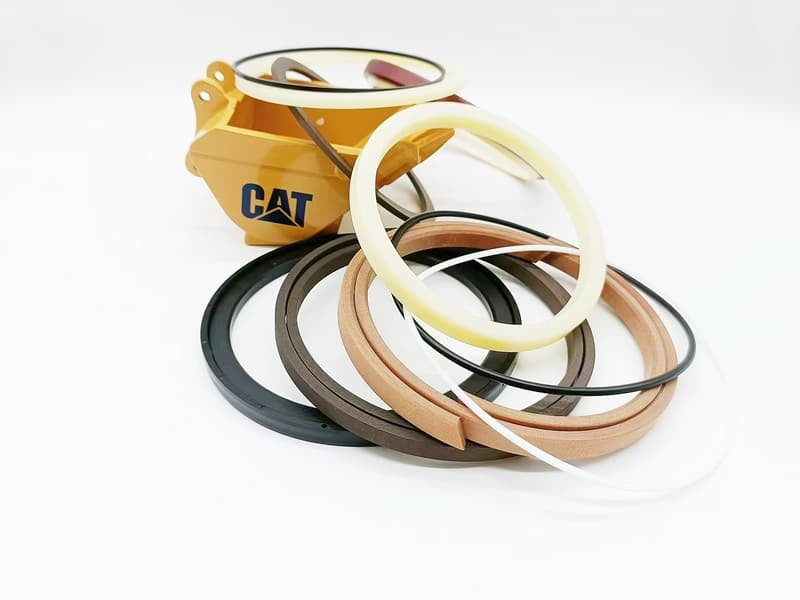
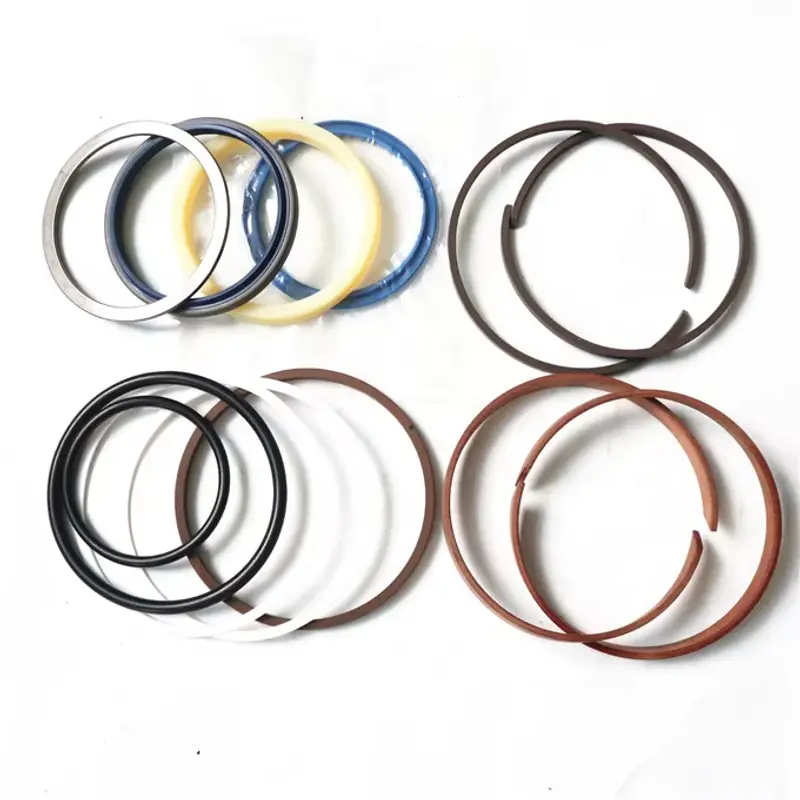
Some kits may contain rod seals, piston seals, wipers, O-rings, backup rings, buffer seals, and wear rings, while others may include only the sealing components required by a specific OEM repair specification.
Always confirm the actual kit contents instead of assuming that every hydraulic cylinder seal kit contains the same components.
15.How FASeals Can Help Identify Your Hydraulic Cylinder Seal Kit
Finding the correct seal kit is much easier when complete cylinder information is available.
FASeals supplies hydraulic cylinder seal kits and replacement sealing components for excavators, loaders, backhoe loaders, bulldozers, cranes, agricultural machinery, construction equipment, and other hydraulic applications.
If you already know the OEM cylinder number or seal kit number, send it to us for cross-reference.
If the number is unavailable, send the machine information together with photos and measurements. Our team can use the available application data, seal dimensions, cylinder dimensions, and old seal samples to help identify a suitable replacement.
For hard-to-find or modified cylinders, dimensional identification and custom sealing solutions may also be considered.
FAQ
1.How do I know which hydraulic cylinder seal kit I need?
Start with the machine model, cylinder position, and cylinder part number. If a seal kit part number is available, use it as the primary reference. When no numbers can be found, measure the piston rod, cylinder bore, old seals, and seal grooves and provide clear photos.
2.Can I identify a seal kit from the machine model alone?
Sometimes, but it is not the safest method. The same machine may use different boom, arm, bucket, steering, or auxiliary cylinders, and production variations may also exist. The cylinder position and cylinder part number should be confirmed whenever possible.
3.Where can I find the hydraulic cylinder part number?
Check the cylinder identification plate, stamped markings on the cylinder, equipment parts manual, OEM parts catalog, or previous repair records.
4.What dimensions are needed to identify hydraulic cylinder seals?
Important dimensions can include piston rod diameter, cylinder bore, seal ID, seal OD, seal width, and seal-groove dimensions. Which measurements are required depends on the seal and cylinder design.
5.Can I identify a hydraulic seal by color?
No. Color alone is not a reliable way to identify seal dimensions, profile, or material. Always use part numbers, measurements, seal shape, installation position, and operating requirements.
6.Why does my new hydraulic cylinder seal keep leaking?
The problem may not be the new seal itself. A scratched or bent rod, damaged barrel, worn gland, excessive guide clearance, contamination, incorrect installation, wrong seal size, or unsuitable seal material can all cause repeated leakage.
7.Do all hydraulic cylinder seal kits contain the same parts?
No. Kit contents depend on the cylinder design and manufacturer. Always check what is included before ordering.
8.Can FASeals identify a seal kit from photos?
Photos can help, especially when they show the complete cylinder, identification markings, piston, gland, and old seals. For reliable identification, photos should normally be combined with machine information, part numbers, or accurate measurements.
Related posts

Hyundai R220LC-9S Hydraulic Cylinder Seal Kit Buying Guide
The Hyundai R220LC-9S Hydraulic Cylinder Seal Kit uses separate hydraulic cylinders for the boom, arm and bucket. Although these cylind...

CAT 320 Excavator Seal Kit Guide: Boom, Arm and Bucket Cylinder Fitment
The CAT 320 is one of the most widely used excavator families in construction, earthmoving, demolition and general equipment fleets. Ho...