

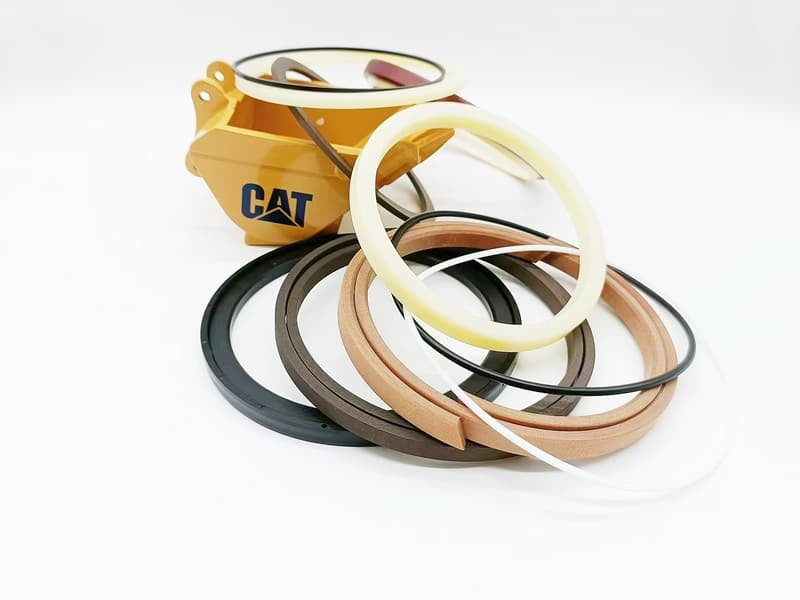
The CAT 320 is one of the most widely used excavator families in construction, earthmoving, demolition and general equipment fleets. However, ordering a CAT 320 seal kit is not always as simple as providing the machine model.
Different CAT 320 generations, serial-number ranges and cylinder positions may use different sealing components. The boom, arm or stick, and bucket cylinders also require separate seal kits. Even two machines carrying a similar CAT 320 model designation may not use the same kit.
This guide explains how to identify the correct hydraulic cylinder seal kit, what information to collect before ordering and what to inspect before rebuilding the cylinder.
You can also browse the FASeals range of hydraulic cylinder seal kits for Caterpillar and other heavy-equipment applications.
Quick Answer: How Do You Find the Correct CAT 320 Seal Kit?
To identify the correct CAT 320 cylinder seal kit, prepare the following information:
- Complete excavator model
- Cylinder position: boom, arm/stick or bucket
- Hydraulic cylinder assembly number
- Existing seal kit part number
- Clear photographs of the cylinder and identification markings
- Rod diameter and cylinder bore, when the part number is unavailable
CAT 320 Boom, Arm and Bucket Seal Kits Are Different
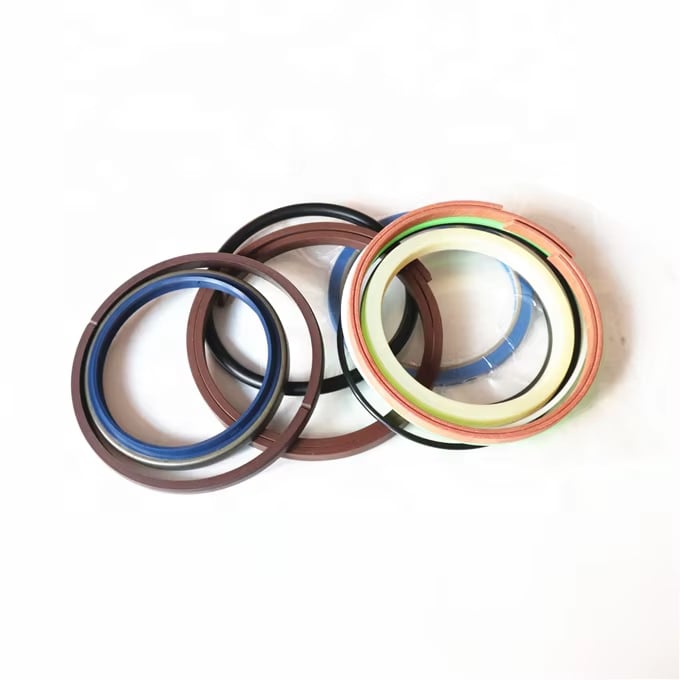
A CAT 320 excavator normally has several hydraulic cylinders. Each cylinder performs a different function and may have different rod diameters, bore sizes, stroke lengths, gland designs and seal arrangements.
| Cylinder position | Main function | Kit that must be confirmed |
|---|---|---|
| Boom cylinder | Raises and lowers the boom | CAT 320 boom cylinder seal kit |
| Arm or stick cylinder | Extends and retracts the arm | CAT 320 arm cylinder seal kit |
| Bucket cylinder | Opens and closes the bucket linkage | CAT 320 bucket cylinder seal kit |
| Track adjuster | Maintains track tension | Track adjuster seal kit |
| Optional attachment cylinder | Operates blade, thumb or special attachment | Application-specific seal kit |
Do not assume that a kit labeled “CAT 320 cylinder seal kit” fits all three main cylinders. Before ordering, confirm exactly where the cylinder is installed.
CAT 320 Seal Kit Part Number Examples
FASeals currently lists several seal kits for CAT 320-series excavators. The following table is intended as a product reference, not as a universal fitment chart.
| Part number | Listed application | Ordering note |
|---|---|---|
| 137-3766 | Caterpillar CAT320 excavator cylinder | Confirm cylinder position and machine serial number |
| 118-6023 | Caterpillar CAT320CL hydraulic cylinder | Confirm the hydraulic cylinder assembly number |
| 135-9059 | Caterpillar CAT320CL hydraulic cylinder | Do not select by machine model alone |
| 464-2932 | Caterpillar CAT320D bucket cylinder | Confirm that the repair is for the bucket cylinder |
Where Can You Find the Required Identification Information?
1. Machine identification plate
Photograph the machine data plate and make sure the complete model and serial number are readable.
Avoid sending only “CAT 320.” More useful examples include:
- CAT 320CL
- CAT 320D
- CAT 320D L
- CAT 320E
- CAT 320F
- CAT 320 GC
The suffix and serial-number prefix can affect parts identification.
2. Hydraulic cylinder number
Inspect the cylinder barrel, mounting area and identification plate for stamped, engraved or printed numbers. Clean away oil and dirt carefully before taking photographs.
A cylinder assembly number is often more useful than measurements because it can help identify the original seal arrangement.
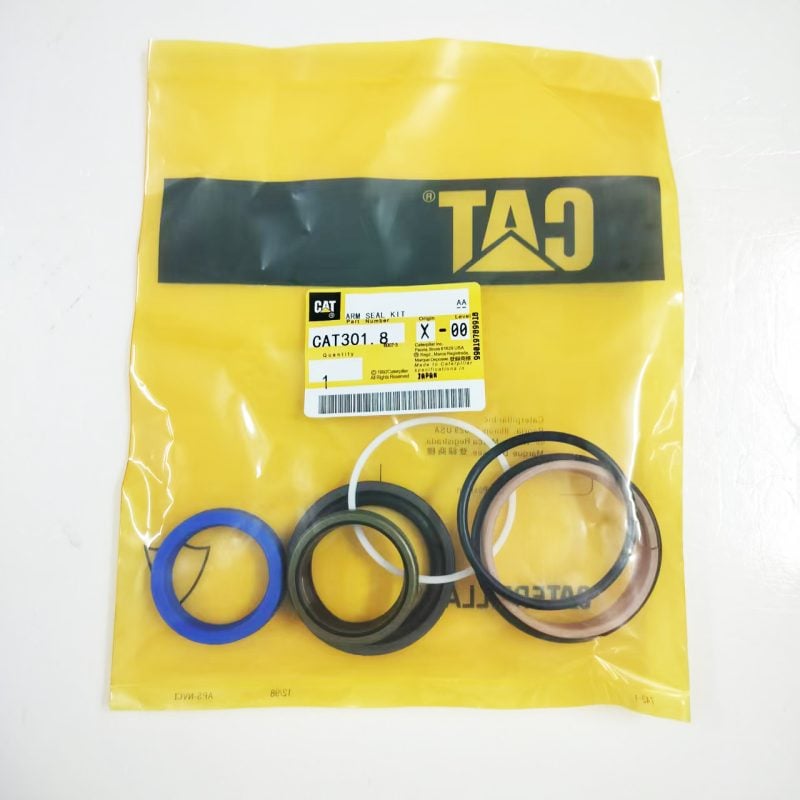
3. Old seal kit packaging
When available, photograph the label from the previous seal kit. Include all barcodes, reference numbers and handwritten notes.
Do not rely on the packaging alone when there is evidence that the cylinder has previously been replaced or rebuilt.
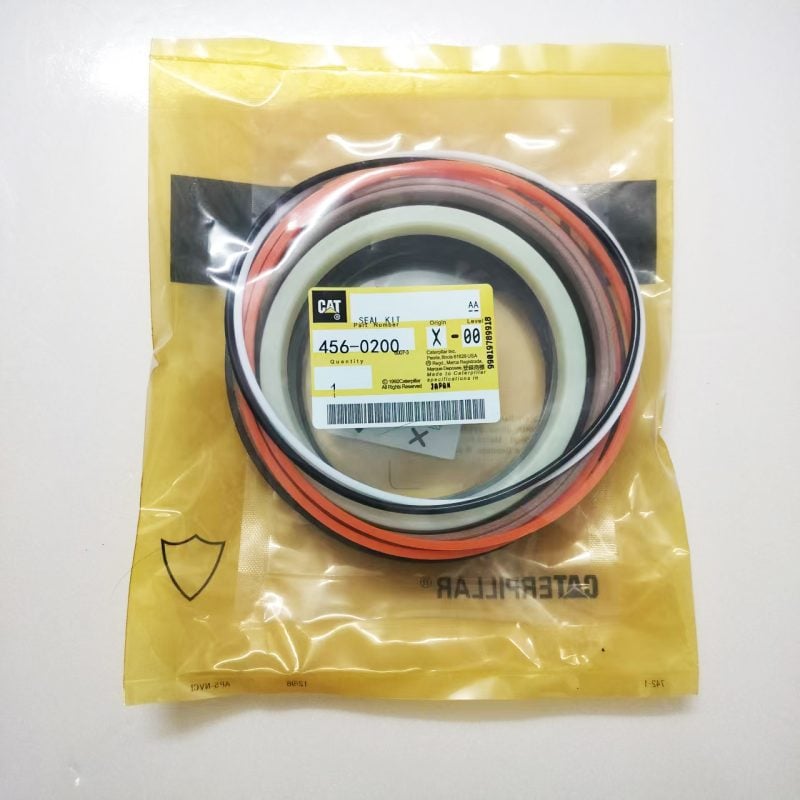
4. Old seals and measurements
When no usable part number is available, the old seals may need to be measured. Useful dimensions include:
- Piston rod diameter
- Cylinder bore diameter
- Gland groove diameter
- Seal outside diameter
- Seal inside diameter
- Seal height or width
- Wear-ring width
- O-ring cross section
Measurements should be taken with suitable calipers or measuring tools. Old seals may be swollen, worn or permanently deformed, so measurements taken from used parts should be treated as supporting information rather than the only identification method.
What Is Usually Included in a Hydraulic Cylinder Seal Kit?
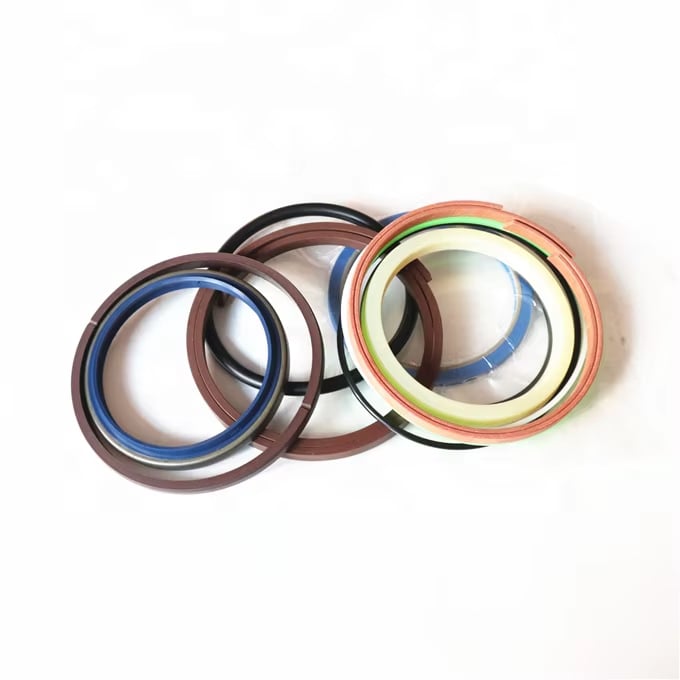
The exact contents depend on the cylinder design and the kit specification. A complete CAT 320 hydraulic cylinder seal kit may contain:
| Component | Main purpose |
|---|---|
| Rod seal | Keeps pressurized hydraulic oil inside the cylinder |
| Buffer seal | Protects the primary rod seal from pressure spikes |
| Wiper or scraper | Removes dirt, moisture and debris from the rod |
| Piston seal | Separates pressure between the cylinder chambers |
| Wear ring | Guides the piston or rod and limits metal contact |
| O-ring | Provides static sealing between assembled components |
| Backup ring | Helps prevent O-ring extrusion under pressure |
| Gland seal | Seals stationary surfaces around the cylinder head |
Not every kit includes every component. Before installation, lay out the new parts beside the removed seals and verify the quantity, profile, size and location of each piece.
FASeals also supplies a broader selection of hydraulic cylinder components and seals for cylinder maintenance and repair applications.
Common Signs That a CAT 320 Cylinder May Need Resealing
Visible oil leakage is the most obvious warning, but it is not the only sign of seal failure.
Oil around the piston rod
Hydraulic oil collecting around the gland or running down the rod may indicate a worn rod seal, damaged wiper, contaminated gland or scratched rod surface.
Boom, arm or bucket drift
A cylinder that slowly moves while the controls are in neutral may have internal leakage. However, drift can also originate from the control valve, load-holding valve or another hydraulic component. Test the system before assuming the piston seal is the only cause.
Slow cylinder operation
Longer cycle times or reduced cylinder speed may be related to internal leakage, low system pressure, pump problems, restricted oil flow or excessive mechanical resistance.
Weak holding force
A cylinder that moves normally without a load but cannot maintain position under load may have internal bypassing. Correct diagnosis is necessary before disassembly.
Repeated seal failure
When a newly installed kit fails again after a short period, inspect for:
- Scratches or pitting on the rod
- Bent piston rod
- Worn cylinder bore
- Damaged gland or seal grooves
- Excessive side loading
- Hydraulic contamination
- Incorrect seal orientation
- Wrong seal material
- Incorrect kit selection
- Excessive system pressure
Caterpillar lists leakage, excessive drift, reduced cylinder speed, bent or scratched rods, contamination and damaged seals among common hydraulic-cylinder repair indicators. Its hydraulic maintenance guidance also emphasizes contamination control when deciding whether a cylinder should be resealed, repaired or replaced.
Should You Replace Only the Seals or Repair the Cylinder?
A seal kit can restore an otherwise serviceable cylinder, but new seals cannot repair damaged metal components.
A reseal may be suitable when:
- The rod is straight and smooth
- The cylinder bore is within specification
- The gland and piston grooves are undamaged
- There is no serious corrosion or scoring
- The failure is limited to worn or aged seals
Additional repair may be required when:
- The rod has deep scratches, rust or chrome damage
- The piston rod is bent
- The cylinder bore is scored or out of round
- The gland is worn
- Seal grooves are damaged
- There is metal contamination in the oil
- The cylinder has been subjected to impact damage
Inspect the complete cylinder before ordering repair parts. Replacing seals without correcting the original mechanical problem often leads to another leak.
Installation Precautions
Hydraulic cylinders can store substantial pressure and support heavy machine structures. Lower the attachment, isolate the machine and release hydraulic pressure according to the appropriate service procedure before removing any cylinder or hydraulic connection.
During installation:
- Work in a clean area.
- Clean the piston, gland, grooves and cylinder tube.
- Remove sharp edges, burrs and old seal fragments.
- Inspect the rod and bore under good lighting.
- Lubricate seals with a compatible clean fluid.
- Use proper seal installation tools.
- Protect the seal from threads, ports and sharp groove edges.
- Confirm the pressure-facing direction of lip seals.
- Avoid twisting O-rings and PTFE sealing elements.
- Reassemble the cylinder according to the correct service specifications.
- Bleed trapped air and test initially at low load.
- Inspect for external leakage and abnormal movement.
The exact service manual and cylinder procedure for the machine should always take priority.
Frequently Asked Questions
Is one CAT 320 seal kit suitable for the boom, arm and bucket cylinders?
Usually not. These cylinders frequently have different dimensions and seal arrangements. Confirm the cylinder position and part number before ordering.
Can I order using only the machine model?
The complete model is helpful, but the machine serial number and cylinder assembly number provide a safer basis for identification.
What is the difference between an arm cylinder and a stick cylinder?
The terms are commonly used for the same excavator component. Depending on the market or parts catalog, it may be called an arm, stick or dipper cylinder.
Can external leakage always be fixed with a new rod seal?
Not always. A scratched, corroded or bent rod can quickly damage a new seal. The rod, gland and cylinder alignment should be inspected before resealing.
Why does the cylinder still drift after installing new seals?
The problem may come from incorrect seal installation, cylinder bore damage, piston leakage or another hydraulic component such as the control valve. Further testing may be necessary.
Does every seal kit contain wear rings and buffer seals?
No. Kit contents depend on the cylinder and supplier specification. Compare the supplied components with the original arrangement before assembly.
Find the Correct CAT 320 Seal Kit
Choosing the correct CAT 320 seal kit starts with identifying the exact machine and cylinder—not simply searching by excavator model.
Before placing an order, confirm:
- Complete machine model
- Serial number
- Boom, arm or bucket cylinder position
- Cylinder assembly number
- Seal kit reference
- Dimensions and photographs when numbers are missing
Browse the available FASeals hydraulic cylinder seal kits or contact FASeals with the machine information, cylinder location, part number and clear photographs. The fitment information can then be checked before shipment.
Related posts


How to Identify the Correct Hydraulic Cylinder Seal Kit
A leaking hydraulic cylinder does not always mean that the entire cylinder needs to be replaced. In many cases, the problem can be repa...

Hyundai R220LC-9S Hydraulic Cylinder Seal Kit Buying Guide
The Hyundai R220LC-9S Hydraulic Cylinder Seal Kit uses separate hydraulic cylinders for the boom, arm and bucket. Although these cylind...