


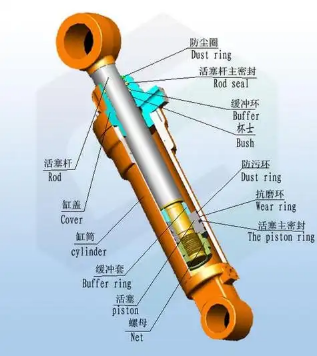
Seals are used in various transmission systems. The performance of seals directly affects the performance of transmission equipment. Good seals must first be considered from the material. If the material of the product is not up to standard, then the fine processing technology cannot be reflected. So what issues do we need to pay attention to when choosing seal materials?
1. Seal materials and working pressure
Seal materials are also very sensitive to working pressure. Seals made of different materials are divided into pressure resistance, oil resistance, and temperature resistance. For oil seals, the working pressure they bear is relatively small. If it exceeds its tolerance range, it will not only cause leakage but also reduce the service life of the seal.
2. Seal materials and working temperature
Too high or too low temperature will affect the performance of the seal. Too high temperature will reduce the hardness and tensile strength of the seal, and too low temperature will make the seal brittle. Therefore, each sealing material has its own limit temperature that it can adapt to.
3. Compatibility of sealing materials with working media
The sealing material will be in direct contact with the medium. If there is no good compatibility between them, it will not only damage the seal but also pollute the sealing medium. The material of the seal should not be corroded and worn by the sealing medium, and chemical reactions should not occur.
4. Sealing material and mechanical movement speed
The adaptability of sealing materials to mechanical movement speed is also different.
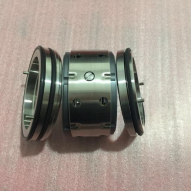
For static seals, there is no relative movement between the seal and the sealed part, so the requirements for material wear resistance and hardness are not high. For dynamic seals, the adaptability of the seal material to the mechanical movement speed is different. Some ordinary materials cannot adapt to high-speed mechanical operation. Therefore, when selecting the seal material, it is necessary to choose a high-grade material with high wear resistance and strength so that high-speed operation can be used.
The materials of seals include nitrile rubber, fluororubber, EPDM, hydrogenated nitrile rubber, silicone rubber, chloroprene rubber, fluorosilicone rubber, polyurethane, epichlorohydrin rubber, styrene-butadiene rubber, butyl rubber, natural rubber, polyacrylate rubber, perfluororubber, etc.
Rubber seals have excellent aging performance, excellent resilience, long-term non-deformation, resistance to weak acids and alkalis, high and low temperature resistance, etc. They can be used at -50 degrees to 250 degrees, and can reach 300 degrees for special requirements. They have excellent insulation, high air permeability, good physiological inertness and physiological stability. Due to the good performance of rubber, it is widely used in the sealing of mechanical hardware, electronic appliances, and small household appliances.
Silicone seals are non-toxic, odorless, and have good corona resistance, arc resistance, aging resistance, high temperature and low temperature resistance. They also have strong elasticity and tensile strength, and can achieve the effect of not breaking or deforming under very strong tensile forces. Often used in daily necessities, electronic accessories, mobile phone waterproof seals, mechanical oil seals and other industries
Silicone seals have a very strong ability to adapt to the environment. After being placed under strong temperature for heating, they can maintain their original shape and state very well, and they are completely non-deformed, and they will not produce any harmful substances under high temperature environments.
The same kind of rubber has different performance indicators due to different formulas, so each material of the seal has its advantages and disadvantages, and we cannot completely say which seal material is good. Different industries need to choose different materials to meet the requirements of the working environment and working medium.
Related posts


Volvo EC210 Hydraulic Cylinder Seal Kit: 7 Essential Tips
The Volvo EC210 series is a medium-sized crawler excavator widely used in earthmoving, road construction, foundation excavation, and bu...

Komatsu PC2000-8 Repair Kits: A Complete Guide for Backhoe and Loading Shovel Excavators
The Komatsu PC2000-8 is a large mining hydraulic excavator widely used in open-pit mines, quarries, large-scale earthmoving projects, a...

Furukawa Breaker Diaphragm: Structure, Function, Selection and Maintenance Guide
The Furukawa breaker diaphragm is installed inside the accumulator chamber. Its main function is to separate hydraulic oil from nitroge...