

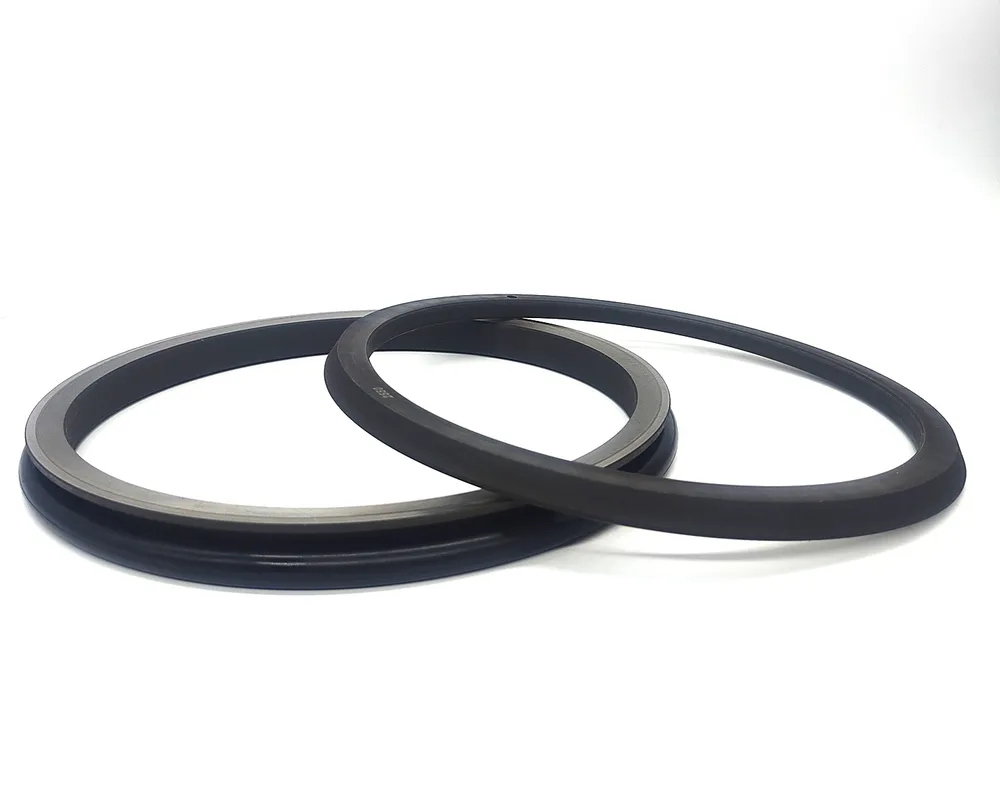
A floating oil seal typically consists of a pair of wear-resistant floating seal rings and a pair of rubber rings, made of ferroalloy material, forming a floating end-face sealing ring.
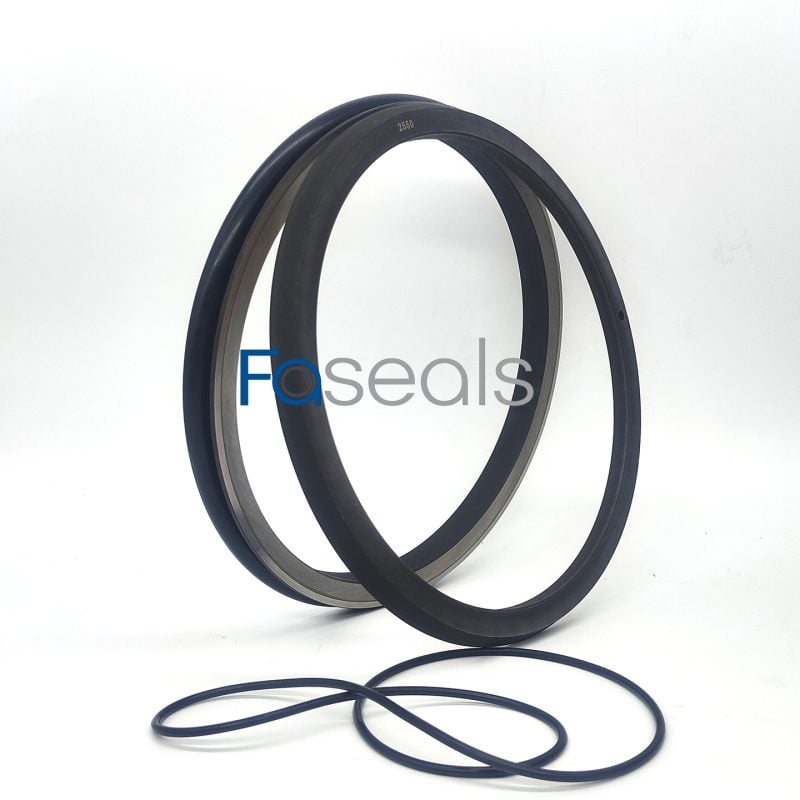
1. Requirements for Floating Oil Seal Seats:
A.The contact area between the inner conical surface of the floating oil seal seat and the O-ring should be free of burrs, sharp angles, and obvious unevenness; the transition should be smooth.
B.The difference in outer diameter between the floating oil seal rings should be less than 0.5mm; proper alignment is crucial during assembly. The O-ring should not be twisted or misaligned during assembly, and no lubricating oil should be present on the contact surface between the O-ring and the ring.
C.When the outer diameter of the floating seal ring is less than 330mm, a 3mm assembly gap between the two floating seal seats is recommended; when the outer diameter of the floating seal ring is greater than or equal to 330mm, a 4mm assembly gap is recommended. After assembly, the floating oil seal should be placed in a testing machine for a dynamic sealing test; there should be no leakage during continuous operation.
2. Requirements for Floating Oil Seal Rings
1). Hardness: 60HRC~72HRC; Depth: Greater than 2mm.
2). The sealing surface and spherical surface of the floating seal ring should be free from defects, burrs, scratches, and dents.
3). The conical surface of the floating seal ring should be flat and smooth, without particle adhesion or obvious unevenness. The coaxiality error between the conical surface and the reference shaft should not exceed φ0.3mm.
4). The static sealing performance test of the floating seal ring should maintain no leakage within 10 minutes.
3. Requirements for O-rings
- The normal operating temperature of O-rings is -60℃ to 120℃.
- The hardness at room temperature is 65±5. The minimum tensile strength at room temperature is not less than 10MPa. The minimum elongation at break at room temperature is not less than 250%.
- After a hot air aging test at 120℃ for 70 hours, the hardness change should not exceed +10.
- After a hot air aging test at 120℃ for 70 hours, the deformation rate should not exceed 35%, and the A-type compression rate should not exceed 25%.
- After being placed in an oven at 120℃ for 250 hours, there should be no breakage or cracking in any of the test areas.
Related posts


Volvo EC210 Hydraulic Cylinder Seal Kit: 7 Essential Tips
The Volvo EC210 series is a medium-sized crawler excavator widely used in earthmoving, road construction, foundation excavation, and bu...

Komatsu PC2000-8 Repair Kits: A Complete Guide for Backhoe and Loading Shovel Excavators
The Komatsu PC2000-8 is a large mining hydraulic excavator widely used in open-pit mines, quarries, large-scale earthmoving projects, a...

Furukawa Breaker Diaphragm: Structure, Function, Selection and Maintenance Guide
The Furukawa breaker diaphragm is installed inside the accumulator chamber. Its main function is to separate hydraulic oil from nitroge...