

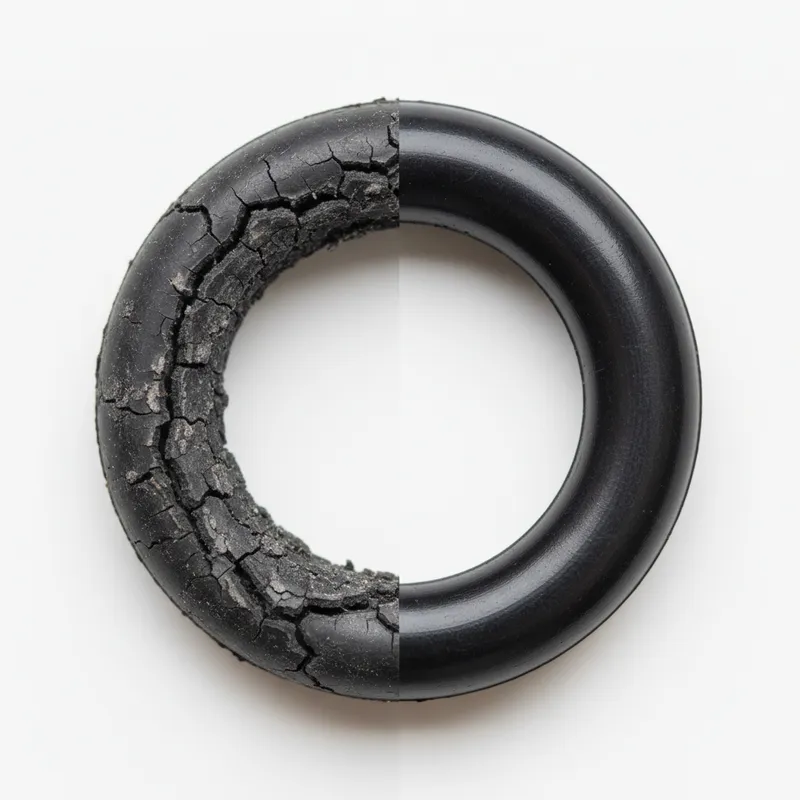
Machined seals can last anywhere from a few months to several years, depending on the application, material, pressure, temperature, fluid type, and installation quality. In clean, well-maintained hydraulic or pneumatic systems, a properly designed machined seal may work reliably for years. In abrasive, high-pressure, high-temperature, or poorly lubricated environments, the service life can be much shorter.
The real question is not only “How long should a machined seal last?” but also “Why did this seal fail, and how can the next one last longer?”
At FASeals, custom machined seals are made for hydraulic, pneumatic, and industrial equipment where standard seals may not fit the required size, profile, or material. Whether you need a one-off replacement seal, an obsolete seal, or a full production run, the right seal design and material choice can make a major difference in equipment reliability.
At FASeals, machined seals are produced for hydraulic, pneumatic, and industrial equipment where standard seals may not fit the required size, profile, or material. Whether the need is a one-off replacement seal, an obsolete seal, or a full production run, the right seal design and material choice can make a major difference in equipment reliability.
What Are Machined Seals?
Machined seals are widely used in hydraulic cylinders, pneumatic cylinders, pumps, rotary equipment, industrial machinery, construction equipment, mining machines, agricultural equipment, and repair workshops. In many repair projects, they are used together with hydraulic seals, seal kits, O-rings, and other industrial sealing products.
They are commonly used when:
- The original seal is obsolete or hard to find
- The equipment uses a non-standard groove size
- A hydraulic cylinder has been repaired or modified
- The rod or bore size is oversized or undersized
- A special material is required for heat, pressure, or chemical resistance
- A prototype or urgent replacement seal is needed
Machined seals are widely used in hydraulic cylinders, pneumatic cylinders, pumps, rotary equipment, industrial machinery, construction equipment, mining machines, agricultural equipment, and repair workshops. They are also commonly supplied together with hydraulic seals, seal kits, O-rings, and other industrial sealing products.
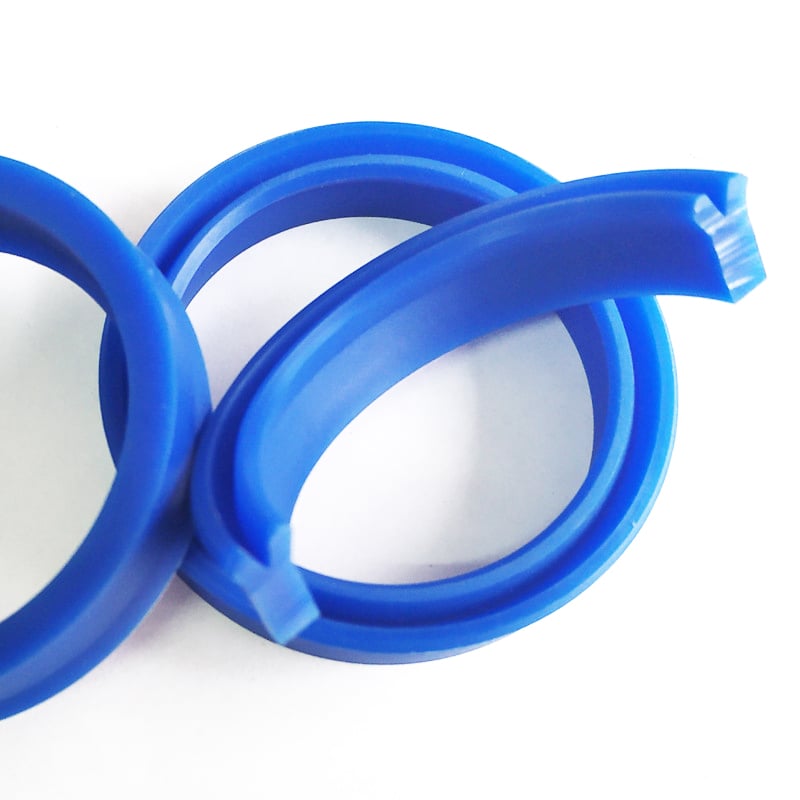
Common machined seal types include:
- U-cup seals
- Rod seals
- Piston seals
- Wipers
- Wear rings
- Back-up rings
- Buffer rings
- Rotary seals
- Bushings
- Shims
- Guide rings
How Long Do Machined Seals Usually Last?
There is no single fixed service life for all machined seals. The same seal profile may last several years in a clean, moderate-pressure hydraulic system but fail within months in a dirty, high-pressure, abrasive application.
A realistic service life depends on the working conditions.
| Application | Typical Service Life | Common Failure Cause |
|---|---|---|
| Clean hydraulic cylinder | 2–5 years | Normal wear, oil aging, installation damage |
| Heavy equipment hydraulic cylinder | 1–3 years | Dirt, shock load, rod damage, pressure spikes |
| Pneumatic cylinder | 2–5 years | Dry air, poor lubrication, seal hardening |
| Rotary shaft application | 1–3 years | Heat, shaft wear, misalignment |
| High-pressure hydraulic system | 6 months–2 years | Extrusion, pressure spikes, wrong material |
| Abrasive or dirty environment | 3–18 months | Contamination, scoring, seal lip wear |
| Chemical service | 6 months–3 years | Material incompatibility, swelling, hardening |
| High-temperature service | 6 months–2 years | Heat aging, loss of elasticity |
| Emergency replacement seal | Depends on design | Incorrect profile or material selection |
These ranges are practical field estimates. A seal that fails too quickly is not always a “bad seal.” In many cases, the root cause is contamination, poor surface finish, incorrect material, groove damage, pressure spikes, or installation problems.
Machined Seal Lifespan by Application
Hydraulic Cylinder Seals
Hydraulic cylinder seals usually work under high pressure, repeated movement, and changing load conditions. In clean oil and a properly maintained cylinder, rod seals and piston seals can last several years.
However, service life becomes shorter when the cylinder operates in construction equipment, mining machinery, excavators, loaders, cranes, or agricultural equipment. These machines often work in dust, mud, heat, vibration, and heavy shock loads.
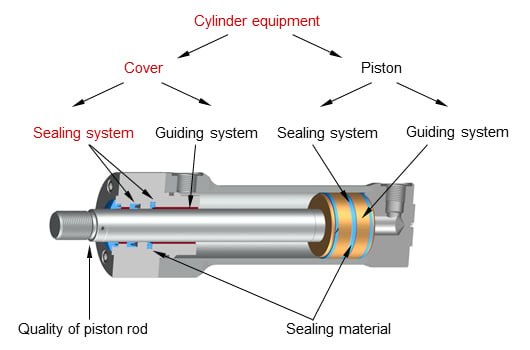
Common reasons hydraulic seals fail early include:
- Scratched chrome rod
- Contaminated hydraulic oil
- Damaged seal groove
- Wrong seal profile
- Incorrect material hardness
- Excessive side load
- Pressure spikes
- Poor installation
If a new hydraulic seal fails again soon after replacement, the cylinder rod, bore, guide ring, oil cleanliness, and pressure condition should be checked before installing another seal.
Pneumatic Seals
Pneumatic seals usually work under lower pressure than hydraulic seals, so they may last longer in clean and well-lubricated air systems. In many applications, pneumatic seals can last 2–5 years.
The most common problem is dry running. Compressed air systems may remove moisture and lubrication, causing the seal lip to dry, harden, or crack over time. Dust and poor air filtration can also damage the sealing surface.
For pneumatic applications, low-friction materials and correct lubrication are important for longer seal life.
Rotary Shaft Seals
Rotary seals face a different kind of stress. Instead of linear movement, they must seal around a rotating shaft. Heat, shaft speed, runout, surface roughness, and lubrication have a major effect on service life.
A rotary seal may fail early if:
- The shaft surface is worn or grooved
- The shaft is misaligned
- The speed is too high for the material
- The seal lip runs dry
- Heat builds up around the contact area
- The wrong elastomer or PTFE compound is used
For rotary equipment and harsh operating environments, machined seals may also be used together with mechanical face seals where the application requires strong protection against dust, mud, oil, or abrasive contamination.
Wear Rings and Guide Rings
Wear rings do not seal fluid directly in the same way as rod seals or piston seals. Their job is to guide the piston or rod and prevent metal-to-metal contact.
A worn guide ring can cause seal failure because the rod or piston becomes unstable. This leads to uneven seal wear, extrusion, leakage, and cylinder scoring.
In many hydraulic cylinder repairs, replacing only the leaking seal is not enough. If the guide ring is worn, the new seal may fail again quickly.
Wipers and Scrapers
Wipers protect the hydraulic system from outside contamination. They remove dirt, water, dust, mud, and debris from the rod before it retracts into the cylinder.
A damaged wiper may not cause immediate oil leakage, but it allows contamination to enter the cylinder. Once dirt reaches the rod seal and guide ring, the internal seals wear faster.
For excavators, loaders, dozers, cranes, and other outdoor machines, wiper condition is one of the biggest factors affecting seal life.
Back-Up Rings
Back-up rings help prevent seal extrusion in high-pressure systems. When pressure is too high, soft sealing materials can be forced into the clearance gap. This causes tearing, nibbling, and early leakage.
Back-up rings are especially important in:
- High-pressure hydraulic cylinders
- Shock-load applications
- Large-diameter cylinders
- Systems with wide extrusion gaps
- Applications using softer sealing materials
If a seal shows signs of extrusion, the solution is not always a harder seal. The groove design, clearance, back-up ring material, and pressure peaks should all be reviewed.
Why Machined Seal Life Varies So Much
Machined seal life depends on the full sealing system, not just the seal itself. A good seal can fail early if the surrounding conditions are poor.
The most important factors include:
- Seal material
- Seal profile
- Working pressure
- Temperature
- Fluid compatibility
- Movement type
- Shaft or rod surface finish
- Groove dimensions
- Installation method
- Oil cleanliness
- Side loading
- Equipment maintenance
This is why custom machined seals should not be selected by size alone. The application details matter.
For example, two seals may have the same dimensions, but one may need polyurethane for hydraulic pressure and wear resistance, while another may need FKM for heat and chemical resistance, or filled PTFE for low friction and high-speed movement.
Main Factors That Shorten Machined Seal Life
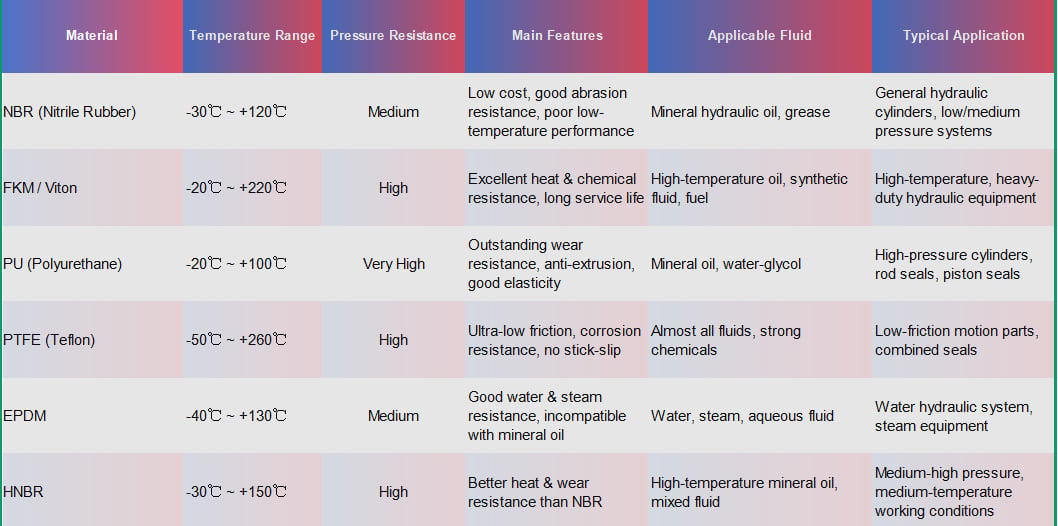
1. Wrong Material Selection
Material selection is one of the most common reasons for early seal failure.
A seal material must match the fluid, temperature, pressure, movement, and environment. If the material is not compatible, the seal may swell, shrink, harden, soften, crack, or lose elasticity.
Common examples:
- NBR works well for many hydraulic oils but may not handle high heat as well as FKM.
- FKM offers better heat and chemical resistance but may not be the best choice for every low-temperature application.
- Polyurethane has excellent wear resistance but may not suit every chemical or high-temperature condition.
- PTFE offers low friction and chemical resistance but often requires proper energizing or support.
- PEEK and engineered plastics may be used where strength, temperature, or extrusion resistance is critical.
When selecting materials, the decision should be based on the real working conditions, not only the old seal color or appearance.
2. Pressure Spikes
Hydraulic systems often experience pressure spikes that are much higher than normal working pressure. These spikes can damage seal lips, force seals into clearance gaps, or cause extrusion.
Early signs of pressure-related seal failure include:
- Nibbled seal edges
- Torn lips
- Flattened seal profile
- Extrusion marks
- Sudden leakage after heavy loading
For high-pressure systems, back-up rings, harder materials, or revised seal profiles may be needed.
3. Poor Surface Finish
The rod, shaft, bore, or groove surface has a direct effect on seal life.
If the surface is too rough, it wears the seal quickly. If it is too smooth, it may not hold enough lubrication. If it is scratched, pitted, corroded, or scored, even a new seal may leak soon after installation.
Before replacing a seal, check:
- Rod chrome condition
- Bore surface
- Groove edges
- Shaft wear
- Corrosion
- Burrs
- Sharp corners
A damaged metal surface can destroy a new seal in a short time.
4. Contaminated Oil or Dirty Working Conditions
Contamination is one of the biggest enemies of hydraulic seals.
Dirt, metal particles, sand, dust, and water can damage seal lips, scratch the rod, and wear guide rings. In heavy equipment, contamination often enters through damaged wipers, poor maintenance, or dirty oil.
To extend seal life:
- Keep hydraulic oil clean
- Replace filters on schedule
- Inspect wipers regularly
- Clean components before installation
- Protect open hydraulic lines during repair
- Avoid installing seals in dusty or dirty conditions
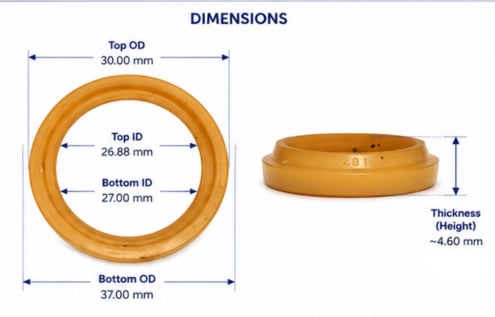
5. Improper Groove Design
A custom seal must match the groove correctly. If the groove is too narrow, too deep, too shallow, or has the wrong clearance, the seal may not work properly.
Common groove-related problems include:
- Seal twisting
- Excessive compression
- Insufficient squeeze
- Extrusion
- Poor lubrication
- Installation damage
When ordering custom machined seals, groove dimensions are just as important as rod or bore diameter.
6. Heat and Chemical Attack
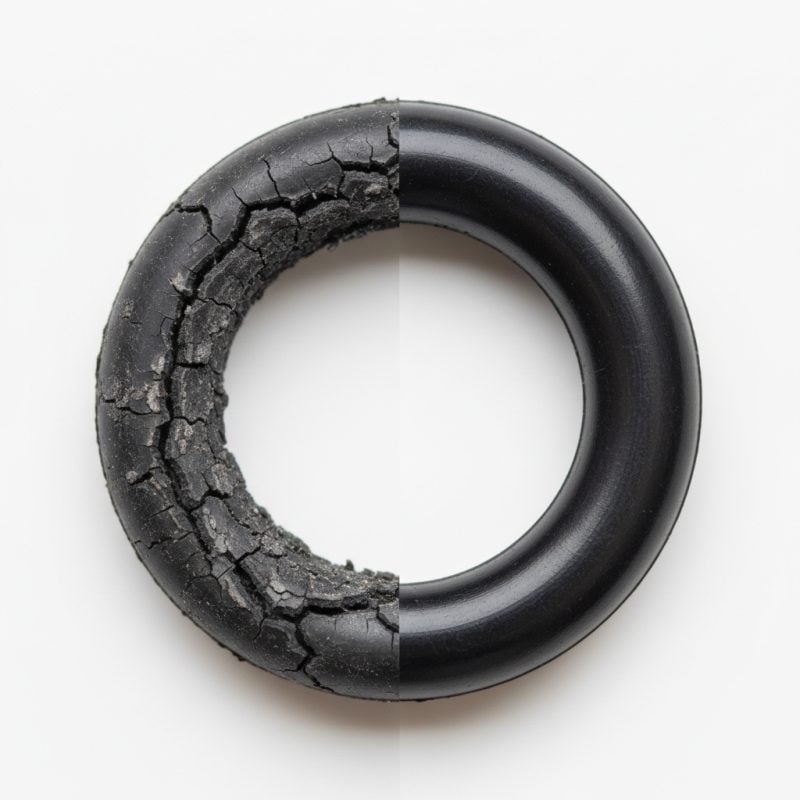
High temperature accelerates seal aging. Chemicals can also change the physical properties of the seal material.
Warning signs of heat or chemical damage include:
- Hardening
- Cracking
- Swelling
- Softening
- Surface blisters
- Loss of elasticity
- Sticky or brittle texture
For harsh environments, materials such as FKM, PTFE, filled PTFE, HNBR, PEEK, or other engineered compounds may be considered depending on the fluid and temperature.
7. Installation Damage
Many seals fail before they even start working because they were damaged during installation.
Common installation mistakes include:
- Stretching the seal too much
- Cutting the lip on sharp edges
- Twisting the seal
- Installing in the wrong direction
- Using metal tools directly on the seal
- Not lubricating the seal before installation
- Forcing the seal into the groove
A correctly manufactured seal still needs correct installation.
Best Materials for Longer Machined Seal Life
Different applications need different materials. There is no single “best” seal material for every job.
NBR
NBR is widely used for hydraulic oil, general oil sealing, and standard industrial applications. It is cost-effective and practical for many normal-temperature systems.
HNBR
HNBR offers better heat, wear, and oil resistance than standard NBR in many demanding applications. It is often used where improved durability is required.
FKM / Viton
FKM is commonly selected for higher temperature and chemical resistance. It is useful for many industrial fluids, fuels, and heat-exposed environments.
EPDM
EPDM is often used for water, steam, and certain chemical applications. It is not suitable for many petroleum-based oils, so compatibility must be checked.
Polyurethane / Urethane
Polyurethane is widely used for hydraulic seals because of its excellent wear resistance, strength, and extrusion resistance. It is common in rod seals, piston seals, wipers, and heavy-duty hydraulic applications.
PTFE
PTFE has low friction, wide chemical resistance, and good temperature capability. It is often used in rotary, high-speed, chemical, and low-friction sealing applications.
Filled PTFE
Filled PTFE can improve wear resistance, strength, or dimensional stability. Common fillers may include bronze, glass, carbon, graphite, or other compounds depending on the application.
PEEK
PEEK is used in demanding applications requiring high strength, high temperature resistance, and excellent dimensional stability.
Nylon and Engineering Plastics
Nylon, POM, and other engineering plastics are often used for guide rings, wear rings, bushings, and support components.
The best material depends on the complete working condition, including fluid, pressure, temperature, speed, hardware condition, and expected service life.
Warning Signs Your Machined Seal Is Near Failure
A seal usually gives warning signs before complete failure.
Oil Leakage
Visible leakage around a cylinder rod, shaft, or housing is the most obvious sign. A small leak may become worse under load or pressure.
Pressure Loss
If the system cannot hold pressure, the internal seal may be worn or damaged.
Cylinder Drift
If a hydraulic cylinder slowly moves under load without command, the piston seal may be leaking internally.
Abnormal Heat
Heat near the sealing area may indicate friction, poor lubrication, wrong material, or misalignment.
Rod or Shaft Scoring
Scratches, corrosion, or grooves on the rod or shaft can quickly damage the seal lip.
Repeated Seal Failure
If the same seal position fails again and again, the problem is usually not only the seal. The root cause may be side load, damaged hardware, contamination, wrong material, or incorrect groove design.
When Should You Replace a Machined Seal?
A machined seal should be replaced when leakage, pressure loss, drift, or visible damage begins to affect machine performance.
You should not wait until complete failure if the equipment is important to production. A planned seal replacement is usually cheaper than emergency downtime, damaged cylinders, contaminated oil, or secondary component failure.
Replace the seal if:
- Leakage keeps increasing
- The seal lip is torn, cracked, or flattened
- The material is hard, swollen, or brittle
- The equipment cannot hold pressure
- The cylinder drifts under load
- The wiper no longer keeps dirt out
- The guide ring is worn
- The seal has suffered dry running or overheating
- The same seal keeps failing repeatedly
For heavy equipment and industrial machinery, it is often better to inspect the full sealing system rather than replacing only one leaking seal.
How to Choose the Right Custom Machined Seal
To choose the right machined seal, you need more than the outside diameter and inside diameter. A proper seal recommendation should consider the full application.
Before ordering, prepare the following information:
- Seal type or profile
- Old seal sample or photo
- Rod or shaft diameter
- Bore diameter
- Groove width
- Groove depth
- Working pressure
- Working temperature
- Fluid type
- Movement type: static, reciprocating, or rotary
- Equipment model
- Application environment
- Required quantity
- Any previous failure symptoms
If the original seal is obsolete, damaged, or unavailable, a custom machined seal can often be made from the old sample, drawing, or hardware dimensions.
Why Choose FASeals for Custom Machined Seals?
FASeals provides custom machined seals for hydraulic, pneumatic, and industrial applications. When standard seals are not available or do not fit correctly, custom machining allows the seal to be produced according to the exact size, profile, and material required.
FASeals can manufacture both small and large machined seals, whether you need one urgent replacement piece or a full production run. Our machining capability supports many seal types, including U-cups, wear rings, bushings, piston seals, rotary seals, back-up rings, shims, bearings, buffer rings, and wipers.
We also offer a wide selection of sealing materials for different working conditions, including NBR, HNBR, EPDM, FKM/Viton, polyurethane, PTFE, filled PTFE, PEEK, nylon, carbon, graphite, and other engineered materials.
If you are not sure which seal material or profile is suitable, our sealing specialists can help review your application and recommend a better solution.
Conclusion
Machined seal life depends on the full application, not only the seal itself. A properly designed and correctly installed machined seal can provide long service life in hydraulic, pneumatic, and industrial equipment. However, harsh working conditions, wrong material selection, dirty oil, pressure spikes, poor surface finish, or damaged hardware can shorten seal life dramatically.
If standard seals do not fit your equipment, or if your machine keeps suffering repeated seal failure, a custom machined seal may be the better solution. By choosing the right profile, material, and dimensions, you can reduce leakage, prevent downtime, and improve equipment reliability.
For custom machined seals, replacement seals, or material recommendations, contact FASeals with your seal sample, drawing, or equipment details. Our team can help you find the right sealing solution for your application.
Related posts

Volvo EC210 Hydraulic Cylinder Seal Kit: 7 Essential Tips
The Volvo EC210 series is a medium-sized crawler excavator widely used in earthmoving, road construction, foundation excavation, and bu...

Komatsu PC2000-8 Repair Kits: A Complete Guide for Backhoe and Loading Shovel Excavators
The Komatsu PC2000-8 is a large mining hydraulic excavator widely used in open-pit mines, quarries, large-scale earthmoving projects, a...

Furukawa Breaker Diaphragm: Structure, Function, Selection and Maintenance Guide
The Furukawa breaker diaphragm is installed inside the accumulator chamber. Its main function is to separate hydraulic oil from nitroge...