

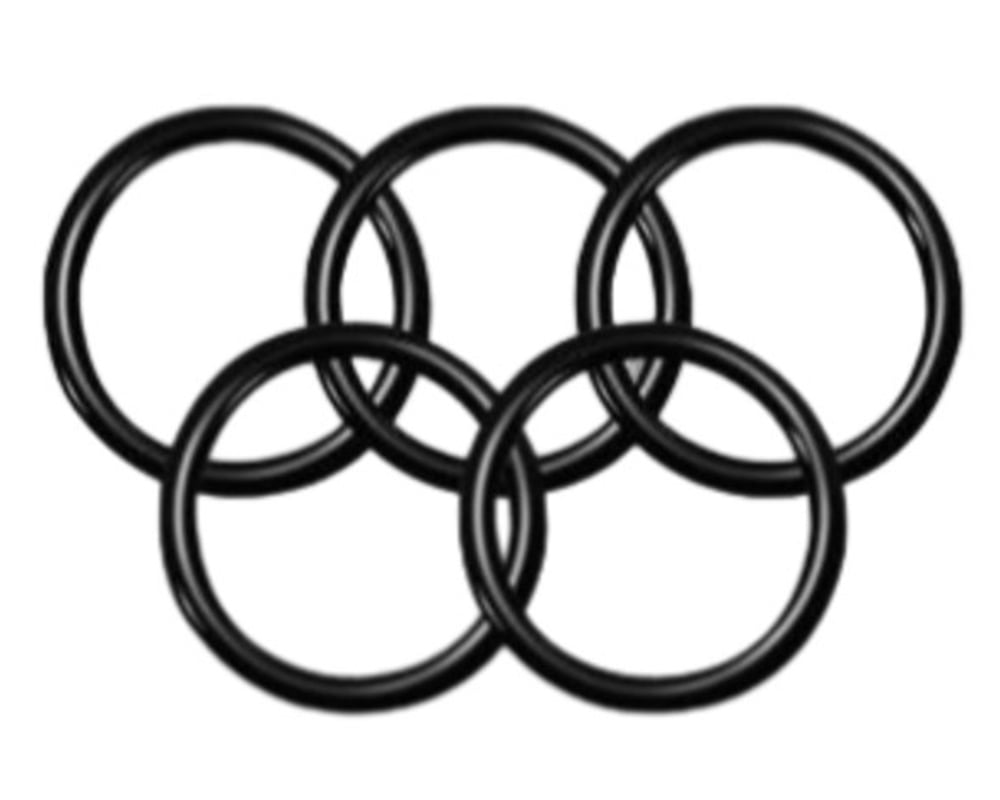
O-rings are widely used in various hydraulic and pneumatic joints, cylindrical faces, and flange faces. Their working principle is that they reside in a groove or channel between two parts to be mated or pressed together. O-rings are typically made of some kind of elastomeric material, located at the joint of these two parts, and are compressed to form a tight seal.
The greater the internal pressure at the joint, the greater the deformation of the O-ring within its groove, which can improve its overall sealing force to some extent—but exceeding a certain pressure or under more dynamic working loads can lead to seal failure. To ensure they function as intended, a suitable balance must be found between the O-ring’s material, size, and working environment.
Over the past 120 years, engineering, manufacturing, and component design have undergone tremendous changes, yet O-rings have remained virtually unchanged in shape and function. Of course, some materials used in O-ring manufacturing have become more advanced over time, but essentially, O-rings remain a simple and reliable solution to a problem posed more than a century ago.Whether sold individually, in bulk wholesale, or, as is increasingly common now, as part of a versatile O-ring kit, the basic shape and function of O-rings are generally similar.
For O-rings used in motion, the following aspects require special attention; otherwise, leakage, shortened lifespan, or even seal failure can easily occur:
1. Correct material selection
Different working conditions require different materials:
- NBR:suitable for hydraulic oil and lubricating oil (most commonly used)
- FKM :high temperature resistance and strong chemical resistance
- EPDM:suitable for water and steam, but not oil-resistant
- PU: high wear resistance, suitable for high-pressure dynamic sealing
Incorrect material selection is one of the most common causes of O-ring failure.
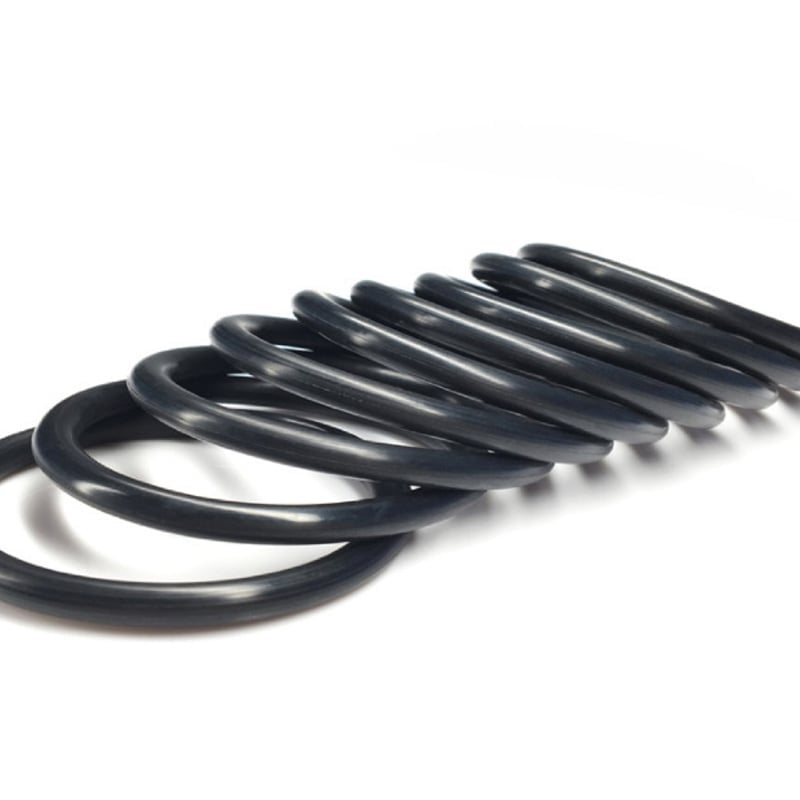
2. Correct size selection
- Do not use “almost fits” sizing
- Must strictly match:
- Cross-section
- Too large → insufficient compression, leakage
- Too small → excessive stretching, easy to break
3. Avoid damage during installation
- Clean grooves before installation to remove debris, metal chips, or sand
- Do not use sharp tools to pry or install
- Recommended:
- Lubricating oil or installation grease
- Guide sleeves to prevent cutting
Most O-ring damage occurs during assembly.
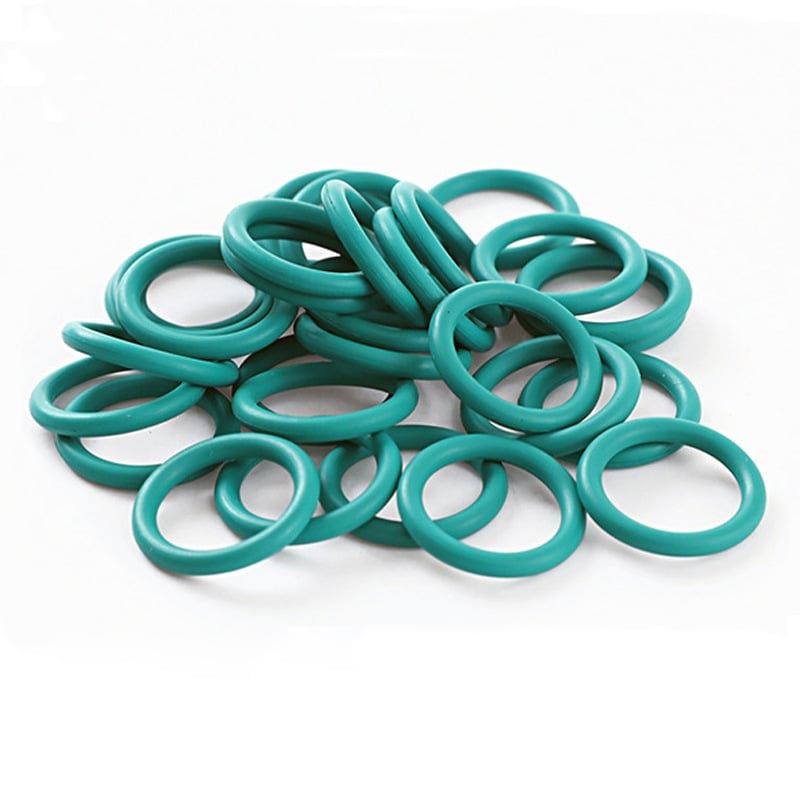
4. Proper compression rate
- Static sealing: 15%–30% compression
- Dynamic sealing: lower compression to reduce heat and wear
- Insufficient compression → leakage
- Excessive compression → heat generation and permanent deformation
5. Avoid twisting during installation
- O-rings must not be twisted or “spiraled”
- Twisting leads to:
- Local stress concentration
- Early cracking or failure
6. Consider temperature and pressure limits
- Exceeding material limits may cause:
- Hardening and cracking
- Compression set (permanent deformation)
- For high-pressure applications, backup rings are recommended
7. Proper storage conditions
- Avoid direct sunlight (UV exposure)
- Avoid high temperature and humidity
- Keep away from ozone sources (e.g., electric motors)
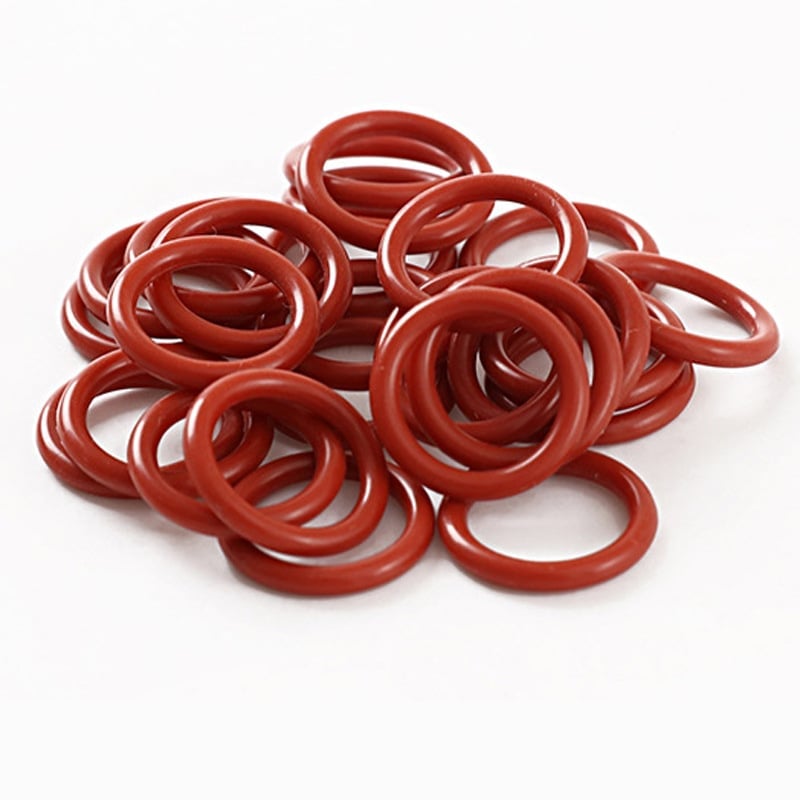
8. Generally not reusable
- O-rings that have been compressed will deform permanently
- It is recommended to replace them during maintenance
9. Proper groove design
- Surface roughness must be appropriate (too rough causes wear, too smooth may slip)
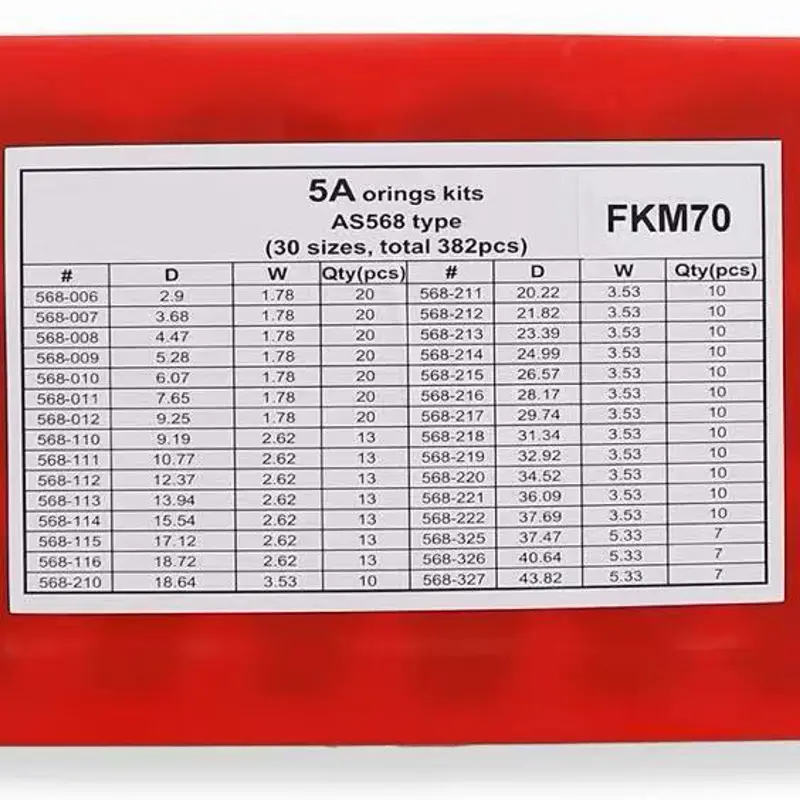
- Metric and Imperial O-Ring Kits for Industrial Sealing( FMK70°)Chamfers are required to avoid cutting the O-ring during installation
The lifespan of an O-ring is directly related to many factors, such as operating conditions, assembly quality, the material of moving parts, machining accuracy, lubrication conditions, and dust prevention measures. Therefore, the exact lifespan of an O-ring can only be determined based on specific operating conditions. In any reciprocating motion sealing application, it must be used according to the rated data or load capacity of the seal, and it must be properly assembled to obtain satisfactory performance.
O-RING seal temperature ranges:
| Nitrile | -50℃~120℃ |
| Hydrogenated nitrile | -45℃~150℃ |
| Polyacrylate | -25℃~175℃ |
| Ethylene-propylene | -50℃~135℃ |
| Chloroprene | -40℃~120℃ |
| Butyl | -55℃~205℃ |
| Fluorosilicone | -60℃~205℃ |
| Fluorocarbon | -25℃~205℃ |
Related posts

Volvo EC210 Hydraulic Cylinder Seal Kit: 7 Essential Tips
The Volvo EC210 series is a medium-sized crawler excavator widely used in earthmoving, road construction, foundation excavation, and bu...

Komatsu PC2000-8 Repair Kits: A Complete Guide for Backhoe and Loading Shovel Excavators
The Komatsu PC2000-8 is a large mining hydraulic excavator widely used in open-pit mines, quarries, large-scale earthmoving projects, a...

Furukawa Breaker Diaphragm: Structure, Function, Selection and Maintenance Guide
The Furukawa breaker diaphragm is installed inside the accumulator chamber. Its main function is to separate hydraulic oil from nitroge...