

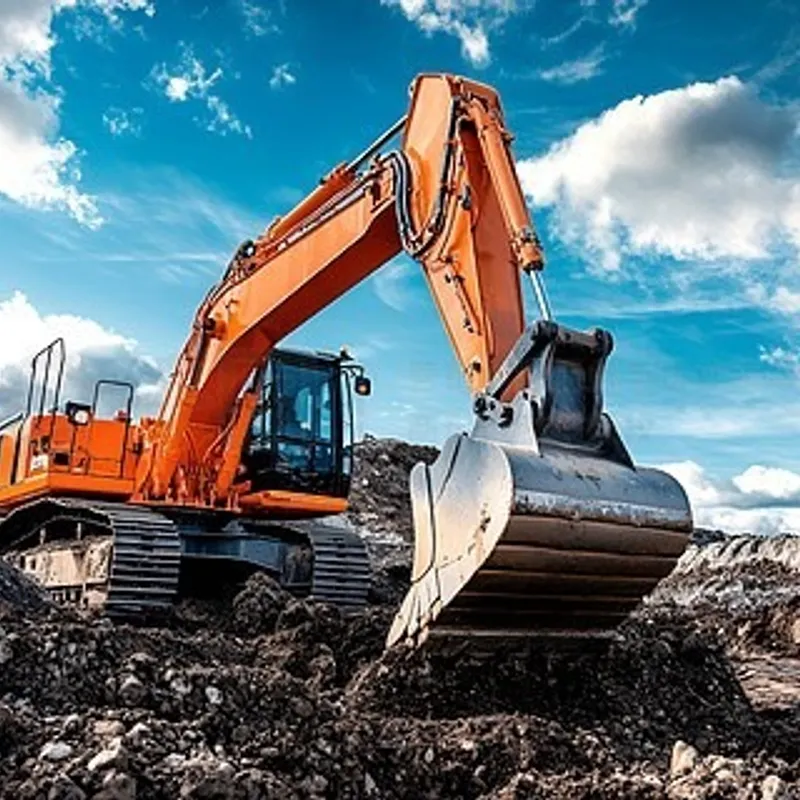
Excavator seals work in one of the toughest environments in mobile hydraulics. They must handle high pressure, shock loads, dirt, mud, heat, vibration, and constant movement. A good seal does more than stop oil leakage. It helps the hydraulic system hold pressure, protect internal components, reduce downtime, and keep the excavator working safely and efficiently.
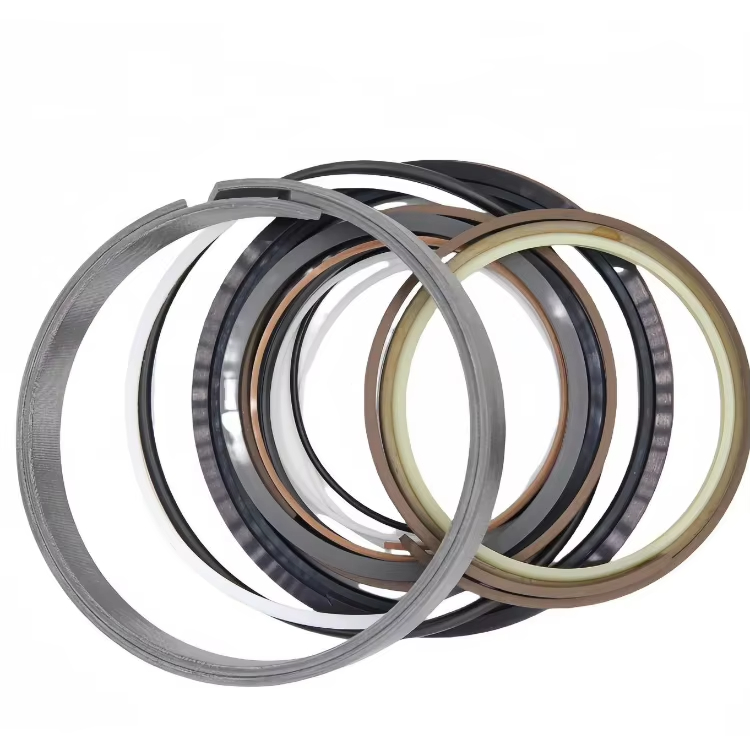
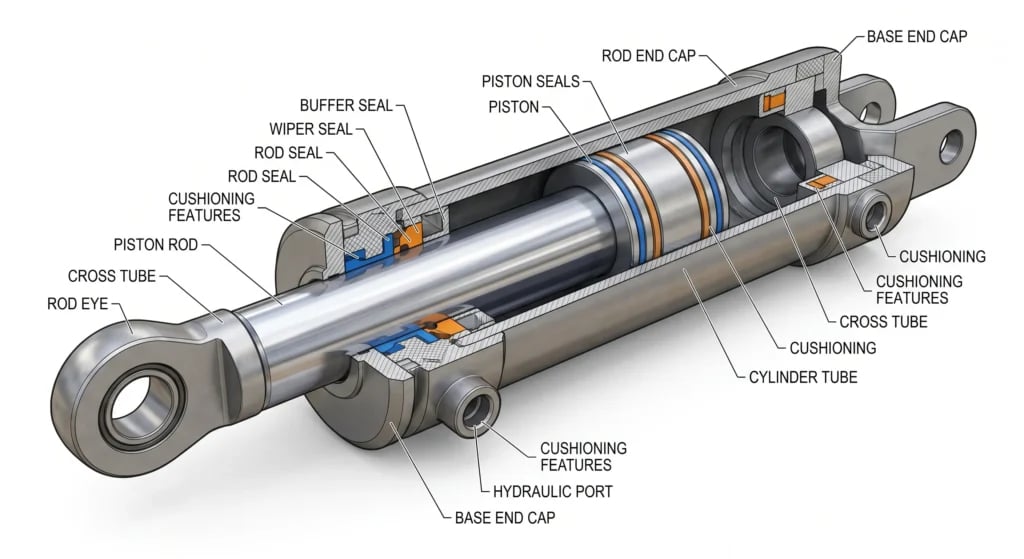
For excavators, seal performance is not only about the material. It depends on the full sealing system, including the rod seal, piston seal, wiper, buffer seal, wear ring, O-rings, back-up rings, groove condition, hydraulic oil cleanliness, and cylinder surface quality.
At FASeals, we supply hydraulic seals, seal kits, O-rings, and custom machined seals for excavators and other heavy equipment applications.
Why Excavator Seal Performance Matters
An excavator relies on hydraulic power for almost every major movement, including boom lifting, arm extension, bucket digging, swing motion, travel drive, blade control, and attachment operation. When a seal starts to fail, the machine may still move, but performance begins to drop.
Poor seal performance can cause:
- Hydraulic oil leakage
- Weak cylinder movement
- Slow boom, arm, or bucket response
- Cylinder drift under load
- Loss of digging force
- Contaminated hydraulic oil
- Scratched rods or damaged bores
- Premature pump and valve wear
- Unexpected downtime
A small seal leak can become a much bigger repair if dirt enters the cylinder or hydraulic oil level drops too low. That is why excavator seals should be selected for durability, pressure resistance, wear resistance, and contamination control.
Main Types of Excavator Seals and Their Performance Roles
Rod Seals
Rod seals are one of the most important seals in an excavator hydraulic cylinder. They prevent pressurized oil from leaking out along the cylinder rod.
A high-performance rod seal should:
- Hold pressure during heavy digging
- Resist extrusion under shock loads
- Maintain sealing force during repeated movement
- Work together with the buffer seal and wiper
- Reduce leakage without creating excessive friction
If the rod seal fails, oil leakage is usually visible on the chrome rod or around the cylinder head. In boom, arm, and bucket cylinders, rod seal failure often becomes obvious during heavy lifting or digging.
Piston Seals
Piston seals separate the pressure zones inside the hydraulic cylinder. Their main job is to allow hydraulic pressure to push the piston and create controlled cylinder movement.
Good piston seal performance helps prevent:
- Internal leakage
- Cylinder drift
- Weak hydraulic force
- Slow movement
- Loss of holding power
If the piston seal is worn, the cylinder may not leak externally, but the machine can still lose power. For example, a boom may slowly drop under load, or a bucket may not hold position properly.
Wiper Seals
Wiper seals, also called scraper seals, protect the hydraulic cylinder from outside contamination. Excavators often work in mud, sand, rock dust, water, and demolition debris. Without a good wiper, dirt can be pulled into the cylinder every time the rod retracts.
A strong wiper seal helps protect:
- Rod seals
- Buffer seals
- Guide rings
- Hydraulic oil
- Cylinder bore
- Chrome rod surface
For excavators, wiper performance is extremely important. A damaged wiper may not cause immediate leakage, but it allows abrasive particles to enter the cylinder. Over time, this can destroy the main sealing system.
Buffer Seals
Buffer seals are used in many heavy-duty hydraulic cylinders to protect the rod seal from pressure spikes. Excavators often face sudden impact loads during digging, lifting, breaking, or working with attachments.
A buffer seal helps:
- Absorb pressure peaks
- Protect the rod seal
- Reduce heat and friction
- Improve cylinder sealing stability
- Extend seal life in high-pressure conditions
In demanding excavator applications, the buffer seal and rod seal must work as a sealing set, not as separate parts.
Wear Rings and Guide Rings
Wear rings do not seal oil directly, but they are critical to seal performance. Their job is to guide the piston and rod while preventing metal-to-metal contact.
Worn guide rings can cause:
- Rod misalignment
- Uneven seal wear
- Cylinder scoring
- Seal extrusion
- Repeated seal failure
If a cylinder seal fails again shortly after replacement, the wear rings should be checked carefully. Replacing only the leaking seal may not solve the root problem.
O-Rings and Back-Up Rings
O-rings are used in many static sealing positions inside excavator hydraulic systems. Back-up rings help prevent O-ring extrusion in high-pressure areas.
They are commonly used in:
- Cylinder heads
- Valve blocks
- Hydraulic pumps
- Motors
- Flanges
- Fittings
- Control valves
In high-pressure excavator systems, O-ring material and back-up ring support are both important. A soft O-ring without proper support can be forced into the clearance gap and fail quickly.
Key Performance Requirements for Excavator Seals
1. High Pressure Resistance
Excavator hydraulic systems work under high pressure, especially during digging, lifting, pushing, and breaking. Seals must resist pressure without extruding, tearing, or losing shape.
A good excavator seal should maintain sealing performance under:
- Normal working pressure
- Sudden pressure spikes
- Heavy load cycles
- Attachment impact
- Repeated cylinder movement
For high-pressure positions, material hardness, seal profile, and back-up ring design must be matched correctly.
2.Wear Resistance
Excavator seals move thousands of times during daily operation. Rod seals, piston seals, and wipers are exposed to continuous sliding contact. If the material has poor wear resistance, the sealing lip becomes thin, rough, or damaged.
Wear-resistant seals are especially important for:
- Boom cylinders
- Arm cylinders
- Bucket cylinders
- Blade cylinders
- Hydraulic breakers
- Grapples
- Demolition attachments
Polyurethane is commonly used in many hydraulic seal applications because it offers strong wear resistance and good mechanical strength. PTFE and filled PTFE may also be used where low friction or special operating conditions are required.
3. Contamination Resistance
Excavators rarely work in clean environments. Dust, mud, sand, water, and metal particles can all shorten seal life.
Contamination affects seal performance by:
- Scratching the rod surface
- Wearing the seal lip
- Damaging guide rings
- Contaminating hydraulic oil
- Increasing friction
- Causing internal leakage
This is why the wiper seal is not a small detail. In excavator cylinders, the wiper is the first defense against contamination.
4. Low Friction and Smooth Movement
A seal must be tight enough to prevent leakage, but not so tight that it creates excessive friction. Too much friction can cause heat, slow movement, stick-slip, and premature wear.
Good seal performance means finding the right balance between:
- Sealing force
- Friction
- Lubrication
- Material flexibility
- Surface finish
- Pressure response
For excavator operators, this affects how smoothly the boom, arm, and bucket respond during work.
5. Temperature Resistance
Excavators often work for long hours in hot weather, enclosed job sites, mining areas, or heavy-duty applications. Hydraulic oil temperature can rise significantly during continuous operation.
High temperature can cause seals to:
- Harden
- Crack
- Lose elasticity
- Shrink
- Swell
- Wear faster
Different materials perform differently under heat. NBR, HNBR, FKM, PU, PTFE, and PEEK each have their own advantages depending on the fluid, temperature, pressure, and working environment.
6. Oil Compatibility
Hydraulic oil compatibility is another key factor. If the seal material does not match the hydraulic fluid, the seal may swell, soften, harden, or crack.
Before choosing excavator seals, it is important to consider:
- Hydraulic oil type
- Additives
- Working temperature
- Pressure level
- Oil cleanliness
- Maintenance interval
Using the wrong material can lead to early failure even if the seal size is correct.
Common Causes of Excavator Seal Failure
Damaged Chrome Rod
A scratched, pitted, or rusted rod can quickly cut the seal lip. If the rod surface is damaged, installing a new seal kit may only give short-term results.
Before replacing seals, check the rod for:
- Scratches
- Rust
- Chrome peeling
- Dents
- Pitting
- Bent rod condition
A damaged rod should be repaired or replaced before installing new seals.
Dirty Hydraulic Oil
Contaminated oil is one of the most common causes of hydraulic seal failure. Dirt and metal particles can act like abrasive powder inside the cylinder.
To protect seal performance:
- Replace hydraulic filters on schedule
- Keep hydraulic oil clean
- Clean components before installation
- Protect open hydraulic lines during repair
- Check oil condition after major cylinder failure
Clean oil helps extend the life of both seals and hydraulic components.
Incorrect Installation
Even a high-quality seal can fail quickly if it is damaged during installation.
Common installation mistakes include:
- Cutting the seal lip on sharp edges
- Installing the seal in the wrong direction
- Twisting the seal
- Using metal tools directly on the sealing lip
- Installing seals without lubrication
- Reusing damaged guide rings or O-rings
A complete seal kit should be installed carefully, with all related seals and support rings checked during the repair.
Wrong Seal Material
The wrong material can reduce seal life dramatically. For example, a seal that works well in normal hydraulic oil may not perform well under high temperature, aggressive fluids, or severe abrasion.
Material selection should consider:
- Pressure
- Temperature
- Fluid type
- Movement speed
- Rod condition
- Application severity
- Outdoor working environment
If standard seals are not suitable, custom machined seals can be made to match specific dimensions, profiles, and material requirements.
Worn Wear Rings
Wear rings support the piston and rod. If they are worn, the rod or piston may move off-center. This creates uneven pressure on the seals.
Symptoms of worn wear rings include:
- Repeated seal failure
- Uneven seal wear
- Cylinder scoring
- Rod side loading
- Internal leakage
- External leakage after short use
For excavator cylinder repairs, wear rings should not be ignored.
How to Choose High-Performance Excavator Seals
Choosing the right excavator seal is not just about matching the part number. The best choice depends on the machine, cylinder position, operating condition, and failure history.
Before selecting replacement seals, prepare the following information:
- Excavator brand and model
- Cylinder type: boom, arm, bucket, blade, swing, travel, or attachment
- Seal kit part number if available
- Rod diameter
- Bore diameter
- Groove dimensions
- Hydraulic oil type
- Working pressure
- Working temperature
- Application environment
- Failure symptoms
- Photos of the old seal or cylinder
For standard repair needs, FASeals can supply excavator hydraulic cylinder seal kits for many machine applications. For special sizes, obsolete seals, or modified cylinders, machined seals can be produced according to the sample, drawing, or hardware dimensions.
Excavator Seal Performance by Application Area
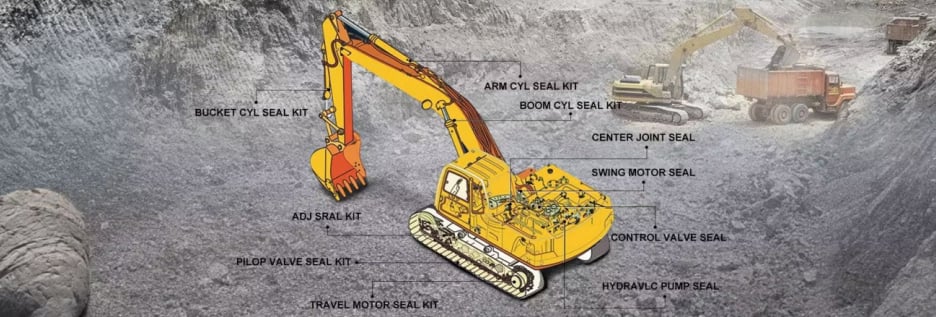
| Excavator Area | Main Seal Type | Key Performance Requirement |
|---|---|---|
| Boom cylinder | Rod seal, piston seal, wiper, wear ring | High load resistance and leakage control |
| Arm cylinder | Rod seal, buffer seal, piston seal | Pressure resistance and wear resistance |
| Bucket cylinder | Rod seal, wiper, guide ring | Dirt resistance and impact durability |
| Swing motor | Rotary seals, O-rings, back-up rings | Oil leakage control under rotation |
| Travel motor | Oil seals, O-rings, face seals | Contamination resistance and durability |
| Hydraulic breaker | High-pressure seals, back-up rings | Shock load and pressure spike resistance |
| Control valve | O-rings, back-up rings | Static sealing and oil compatibility |
| Pump area | Oil seals, O-rings, mechanical seals | Heat resistance and fluid control |
For drive systems and harsh outdoor working areas, mechanical face seals may also be used where strong protection against mud, sand, water, and abrasive contamination is required.
Signs Your Excavator Seals Need Replacement
You should inspect or replace excavator seals if you notice:
- Oil leakage around the cylinder rod
- Hydraulic oil dripping from the cylinder head
- Boom, arm, or bucket drifting under load
- Slow or weak cylinder movement
- Hydraulic oil level dropping frequently
- Dirt buildup around the rod seal area
- Scratches or oil streaks on the rod
- Abnormal heat around the cylinder
- Repeated failure after recent repair
A small leak should not be ignored. Once the seal lip is damaged, contamination can enter the cylinder and cause more expensive damage.
How to Improve Excavator Seal Service Life
To improve excavator seal performance and service life:
- Keep hydraulic oil clean.
- Replace filters regularly.
- Inspect cylinder rods for scratches or rust.
- Replace wipers before dirt enters the cylinder.
- Use the correct seal material for the working condition.
- Avoid forcing seals during installation.
- Replace worn wear rings and back-up rings together with the main seals.
- Check for side loading, bent rods, or damaged cylinder bores.
- Use complete seal kits instead of replacing only one visible leaking seal.
- Choose a reliable sealing supplier for the correct size, material, and profile.
Proper maintenance helps reduce downtime and protects the hydraulic system from secondary damage.
Why Choose FASeals for Excavator Seals?
FASeals provides sealing solutions for hydraulic and industrial applications, including excavators, loaders, hydraulic breakers, and other heavy equipment. The product range includes hydraulic seals, seal kits, O-rings, oil seals, piston seals, machined seals, and other sealing products.
For customers who cannot find a standard replacement, FASeals also offers custom machined seals designed for specific dimensions, materials, and performance needs. This is especially useful for obsolete seals, repaired hydraulic cylinders, modified equipment, and special industrial sealing challenges.
Whether you need a standard excavator cylinder seal kit or a custom sealing solution, you can request a quote with your part number, machine model, seal sample, or cylinder dimensions.
Conclusion
Excavator seal performance directly affects hydraulic power, machine reliability, oil leakage control, and equipment downtime. A high-performance seal must resist pressure, wear, contamination, temperature, and repeated movement in harsh jobsite conditions.
When choosing excavator seals, do not look at size alone. The seal profile, material, application position, oil condition, rod surface, groove design, and installation quality all affect service life.
For excavator hydraulic cylinder seal kits, O-rings, mechanical face seals, and custom machined sealing solutions, FASeals can help you choose the right sealing products for your equipment and working conditions.
FAQ About Excavator Seal Performance
1.What makes a good excavator seal?
A good excavator seal should resist pressure, wear, heat, contamination, and hydraulic oil exposure. It should prevent leakage while allowing smooth cylinder movement./2.Why do excavator hydraulic seals fail quickly?
Common causes include contaminated oil, scratched rods, worn guide rings, pressure spikes, wrong material, poor installation, and damaged cylinder grooves.
2.Should I replace only the leaking seal?
Usually, it is better to inspect and replace the complete sealing set. If the wiper, guide ring, O-ring, or back-up ring is worn, replacing only the leaking seal may lead to repeated failure.
3.What materials are commonly used for excavator seals?
Common materials include polyurethane, NBR, HNBR, FKM, PTFE, filled PTFE, POM, nylon, and PEEK. The best material depends on pressure, temperature, fluid type, and working condition.
4.How do I know which seal kit I need?
You can identify the seal kit by excavator model, cylinder type, part number, old seal sample, or cylinder dimensions. Photos and measurements can help confirm the correct replacement.
5.Can custom excavator seals be made if the original seal is unavailable?
Yes. If the original seal is obsolete or hard to find, a custom machined seal can often be made from a sample, drawing, or cylinder hardware dimensions.
Related posts

Volvo EC210 Hydraulic Cylinder Seal Kit: 7 Essential Tips
The Volvo EC210 series is a medium-sized crawler excavator widely used in earthmoving, road construction, foundation excavation, and bu...

Komatsu PC2000-8 Repair Kits: A Complete Guide for Backhoe and Loading Shovel Excavators
The Komatsu PC2000-8 is a large mining hydraulic excavator widely used in open-pit mines, quarries, large-scale earthmoving projects, a...

Furukawa Breaker Diaphragm: Structure, Function, Selection and Maintenance Guide
The Furukawa breaker diaphragm is installed inside the accumulator chamber. Its main function is to separate hydraulic oil from nitroge...