


Description:Learn how to choose the right cylinder seal kit for hydraulic cylinders used in excavators, dump trucks, loaders, cranes, and industrial machinery. Understand seal types, materials, failure signs, and replacement tips.
Hydraulic cylinders work under pressure, load, heat, dust, vibration, and continuous movement. Whether the machine is a dump truck, excavator, wheel loader, crane, agricultural machine, or industrial press, the cylinder must move smoothly and hold pressure without oil leakage. In many cases, the real difference between a reliable hydraulic system and repeated downtime is not only the cylinder body itself, but also the quality and fitment of the cylinder seal kit.
A cylinder seal kit is used to restore the sealing performance of a hydraulic cylinder during repair or overhaul. It normally includes the main seals required for the piston, rod, gland, and other sealing positions inside the cylinder. When the seals wear out, harden, crack, or lose elasticity, the cylinder may leak oil, lose lifting force, drift under load, or move unevenly.
For equipment owners and repair shops, choosing the correct hydraulic cylinder seal kit is a practical way to reduce downtime and extend the service life of the machine.
If you are sourcing replacement seal kits for construction equipment, agricultural machinery, or industrial hydraulic systems, FASeals provides a wide range of hydraulic cylinder seal kits and related sealing solutions.
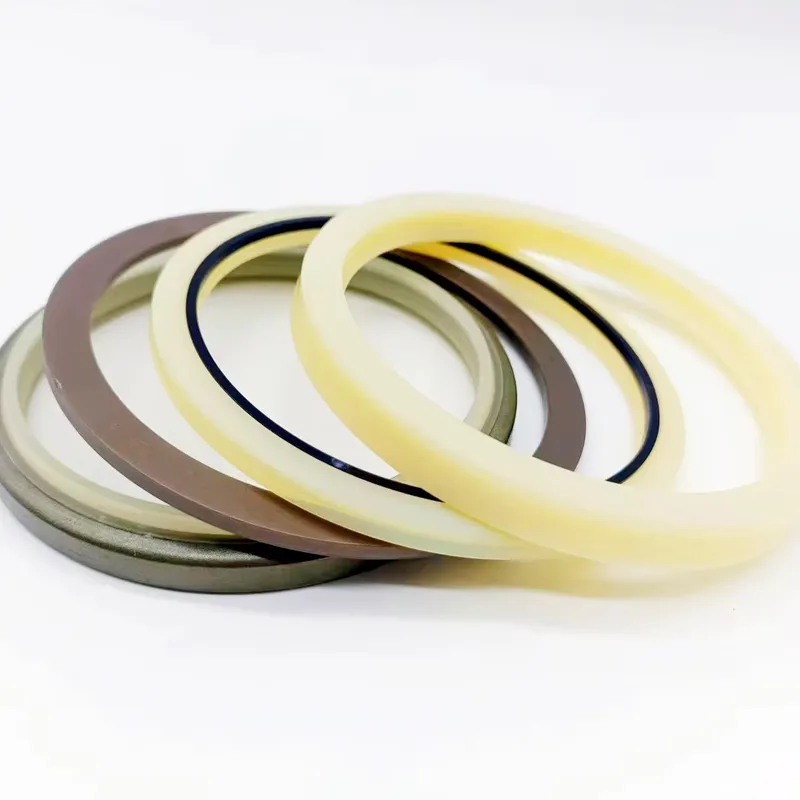
What Is a Cylinder Seal Kit?
A cylinder seal kit is a complete set of seals used to rebuild or repair a hydraulic cylinder. Instead of replacing only one worn seal, a full kit allows the technician to refresh the key sealing points inside the cylinder at the same time.
A typical cylinder seal kit may include:
- Rod seal
- Piston seal
- Wiper seal / dust seal
- Wear ring
- Backup ring
- O-rings
- Buffer seal
- Guide ring
- Gland seals
- Static seals
The exact contents depend on the cylinder type, equipment model, bore size, rod size, and working pressure. For example, a boom cylinder seal kit for an excavator may be different from a lift cylinder seal kit for a wheel loader or a telescopic cylinder seal kit for a dump truck.
You can browse FASeals’ full seal kit category here: Customized Hydraulic Cylinder Seal Kits at FASeals.
Why Cylinder Seal Kits Matter in Hydraulic Systems
Hydraulic cylinders rely on seals to keep oil inside the system and contaminants outside. When a seal fails, the problem may start as a small oil leak, but it can quickly develop into poor machine performance or expensive cylinder damage.
A quality cylinder seal kit helps:
- Prevent external hydraulic oil leakage
- Reduce internal bypass inside the cylinder
- Maintain lifting and holding force
- Protect the rod and cylinder bore from contamination
- Improve cylinder movement stability
- Reduce heat and pressure loss
- Extend the working life of the hydraulic cylinder
In heavy-duty equipment, seal failure often appears under load. A machine may work normally when empty, but the boom, bucket, blade, lift arm, or dump body may become weak when pressure increases. That is why replacing seals early is often much cheaper than waiting until the cylinder rod, piston, or barrel is damaged.
For cylinder components, repair parts, and sealing solutions, you can also visit: Hydraulic Cylinder Components & Seals.
Common Applications of Cylinder Seal Kits
Cylinder seal kits are used across many types of hydraulic equipment. The application determines the seal structure, material, pressure resistance, and wear resistance requirements.
Excavators
Excavators use hydraulic cylinders for the boom, arm, bucket, blade, and sometimes the offset or swing systems. These cylinders work in dusty, muddy, and high-load environments. A worn boom cylinder seal kit or bucket cylinder seal kit can cause oil leakage, weak digging force, or cylinder drift.
Common excavator seal kit applications include:
- Boom cylinder seal kit
- Arm cylinder seal kit
- Bucket cylinder seal kit
- Blade cylinder seal kit
- Track adjuster seal kit
- Control valve seal kit
- Center joint seal kit
FASeals supplies seal kits for many excavator brands, including Caterpillar, Komatsu, Hitachi, Volvo, Kobelco, Hyundai, Kubota, Sany, XCMG, Case, and more.
Example product reference: VOE11712387 Hydraulic Cylinder Seal Kit for Volvo.
Dump Trucks
Dump trucks often use heavy-duty lifting cylinders or telescopic hydraulic cylinders. These cylinders handle high loads during tipping and must maintain strong sealing performance through long strokes. A leaking dump truck cylinder can slow down the lifting process, reduce safety, and create hydraulic oil waste.
For dump truck cylinder seal kits, correct measurement is very important because telescopic cylinders may contain multiple stages, each with different seal sizes.
Wheel Loaders and Bulldozers
Wheel loaders and bulldozers rely on hydraulic cylinders for lifting, tilting, steering, blade control, and ripper movement. These machines often work under impact load, dust, and frequent cycling. The seal kit must resist abrasion and pressure spikes.
Cranes and Lifting Equipment
Cranes, aerial work platforms, forklifts, and lifting platforms require stable hydraulic sealing because safety and load-holding performance are critical. Internal leakage can cause slow cylinder drift, while external leakage can create safety risks.
Agricultural Machinery
Tractors, harvesters, balers, seeders, and forestry machinery all use hydraulic cylinders. In agricultural work, seals may face dust, mud, fertilizer, temperature changes, and outdoor storage conditions. Choosing the right material helps improve seal life.
Main Types of Seals in a Cylinder Seal Kit
Understanding the function of each seal helps you choose the correct kit and diagnose cylinder problems more accurately.
Rod Seal
The rod seal is one of the most important seals in a hydraulic cylinder. It prevents pressurized oil from leaking along the piston rod. If the rod seal fails, oil usually appears around the rod or gland area.
Common signs of rod seal failure:
- Oil on the cylinder rod
- Oil dripping from the gland
- Dust sticking to leaked hydraulic oil
- Reduced hydraulic efficiency
Piston Seal
The piston seal prevents oil from bypassing the piston inside the cylinder. If the piston seal is worn, the cylinder may lose force even when there is no visible external leak.
Common signs of piston seal failure:
- Cylinder drifts under load
- Weak lifting force
- Slow operation
- Machine cannot hold position
- Oil temperature rises faster than normal
Wiper Seal / Dust Seal
The wiper seal removes dirt, dust, mud, and moisture from the rod surface as it retracts into the cylinder. A damaged wiper seal allows contamination to enter the cylinder, which can damage internal seals and scratch the rod or bore.
Wear Ring
Wear rings support the piston and rod guidance. They reduce metal-to-metal contact and help keep the cylinder movement stable. If the wear ring is badly worn, the cylinder may develop side loading, scoring, or uneven seal wear.
Backup Ring
Backup rings support seals under high pressure and help prevent extrusion. They are especially important in heavy-duty hydraulic cylinders where pressure spikes are common.
O-Rings and Static Seals
O-rings and static seals are used in non-moving sealing areas. They help prevent leakage between assembled cylinder components, such as gland, head, piston, or port connections.
FASeals also supplies O-rings and other sealing products. You can learn more from the FASeals homepage: FASeals Sealing Solutions.
How to Choose the Right Cylinder Seal Kit
Choosing the wrong seal kit can lead to leakage, difficult installation, or fast failure. Before ordering, always confirm the cylinder and equipment information as clearly as possible.
1. Confirm the Equipment Brand and Model
Start with the equipment brand, model, and cylinder position. For example:
- Volvo excavator boom cylinder
- Hitachi arm cylinder
- CAT bucket cylinder
- Komatsu blade cylinder
- Kubota boom cylinder
- Dump truck telescopic cylinder
If the machine model is known, the supplier can match the kit more accurately.
2. Identify the Cylinder Position
The same machine may use several different cylinders. A boom cylinder seal kit is not always the same as an arm cylinder seal kit. A bucket cylinder may use a different bore and rod size. Always confirm whether the kit is for boom, arm, bucket, blade, steering, lift, tilt, or telescopic cylinder.
3. Check the Part Number
If you have an OEM part number, it is usually the fastest way to identify the correct replacement seal kit. Part numbers reduce mistakes, especially for machines with multiple production years or cylinder variations.
4. Measure the Cylinder
If the part number is unavailable, measure the cylinder carefully. Important measurements may include:
- Rod diameter
- Bore diameter
- Seal groove size
- Cylinder stroke
- Gland size
- Piston dimensions
- Seal cross-section
For custom or older cylinders, photos and measurements are very helpful.
5. Match the Working Conditions
Different applications require different seal materials. A cylinder used in mining, demolition, forestry, or high-temperature environments may need stronger wear resistance, temperature resistance, or pressure resistance than a light-duty cylinder.
Factors to confirm:
- Working pressure
- Oil type
- Temperature range
- Cycle frequency
- Dust or mud exposure
- Outdoor or corrosive environment
- Side load condition
- Speed of movement
6. Choose the Right Material
Common hydraulic seal materials include PU, NBR, HNBR, FKM, PTFE, and fabric-reinforced materials. Each material has different advantages.
PU is often used for wear resistance and pressure resistance.
NBR is widely used for hydraulic oil compatibility.
PTFE is used where low friction and chemical resistance are needed.
FKM is suitable for higher temperature and chemical resistance applications.
For special operating conditions, you can contact FASeals for material advice: Contact FASeals.
Common Signs That a Cylinder Seal Kit Needs Replacement
A hydraulic cylinder does not always fail suddenly. In most cases, the seal kit gives warning signs before serious damage occurs.
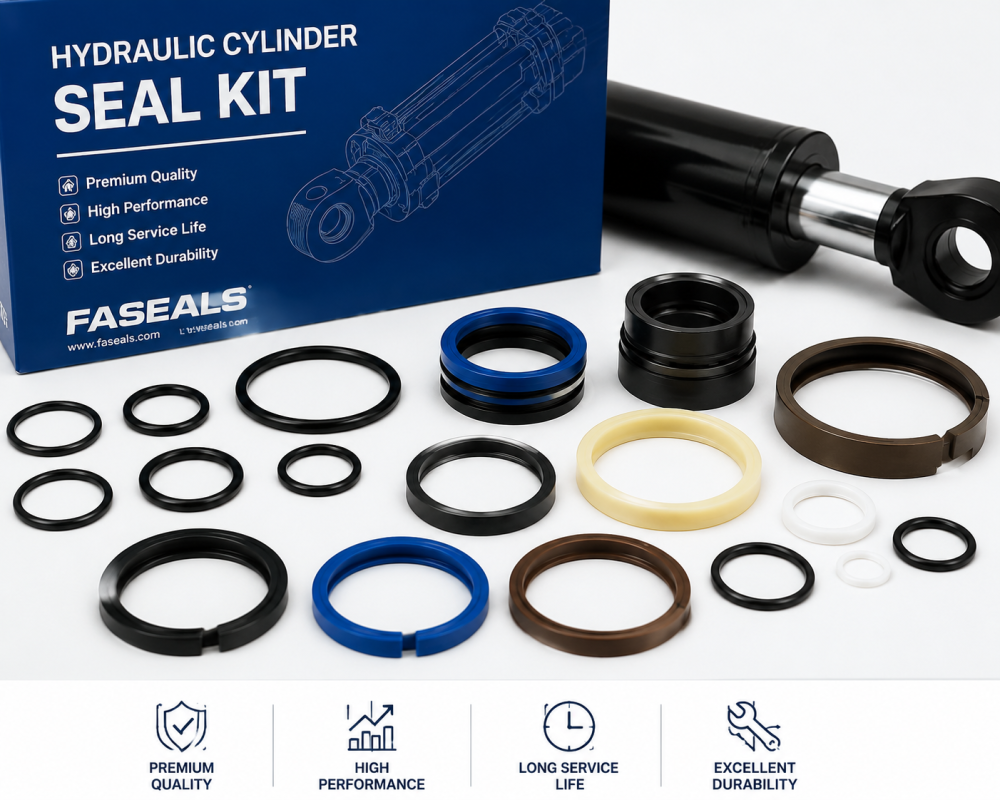
| Symptom | Possible Seal Problem | Risk Level | Recommended Action |
|---|---|---|---|
| Oil leaking around rod | Rod seal or wiper seal worn | Medium to high | Replace seal kit and inspect rod surface |
| Cylinder drifts under load | Piston seal internal leakage | High | Rebuild cylinder with correct piston seal kit |
| Weak lifting force | Internal bypass or pressure loss | High | Test pressure and inspect piston seals |
| Jerky cylinder movement | Contamination or seal damage | Medium | Inspect oil, seals, and cylinder bore |
| Rod surface has scratches | Wiper seal failure or contamination | High | Repair rod and replace seals |
| Oil gets hot quickly | Internal leakage or friction | Medium to high | Inspect piston seal and wear rings |
| New seals fail quickly | Wrong size, wrong material, or rod damage | High | Recheck kit selection and cylinder condition |
If the rod is scratched, bent, rusted, or pitted, replacing only the seal kit may not solve the problem. The new seal can be damaged quickly by the poor rod surface.
Cylinder Seal Kit Replacement Tips
Replacing a seal kit requires clean working conditions and careful installation. Many new seals fail early because of contamination, incorrect tools, sharp edges, or wrong installation direction.
Practical tips:
- Clean the cylinder before disassembly
- Release hydraulic pressure safely
- Keep all parts organized during teardown
- Take photos before removing old seals
- Check seal direction before installation
- Avoid using sharp tools that cut the seal
- Lubricate seals before assembly
- Inspect rod, piston, gland, and barrel surfaces
- Replace wear rings and backup rings when included
- Flush contaminated hydraulic oil if necessary
- Test the cylinder before returning it to service
During installation, do not force the seal into the groove if the size does not match. A tight or twisted seal may look installed, but it can fail once pressure is applied.
Why Seal Quality Affects Cylinder Life
A hydraulic cylinder is a precision component. Even a small sealing problem can affect the entire system. Poor-quality seals may harden, crack, swell, extrude, or wear too quickly. Once leakage starts, hydraulic efficiency drops and other components may also suffer.
High-quality cylinder seal kits help reduce:
- Oil leakage
- Pressure loss
- Contamination damage
- Friction and heat
- Unplanned downtime
- Repeat repair costs
For repair shops, fleet owners, and parts distributors, using a reliable seal kit also reduces customer complaints and repeat maintenance.
FASeals offers aftermarket seal kits, hydraulic cylinder seals, O-rings, oil seals, piston seals, and custom sealing solutions for many equipment types and brands. See more here: FASeals Hydraulic Seal Kits.
Cylinder Seal Kit Supplier Checklist
When choosing a cylinder seal kit supplier, do not only compare price. The correct fitment and material quality matter more than a small cost difference.
A reliable supplier should be able to support:
- Equipment model or part number matching
- Multiple machine brands and applications
- Material selection guidance
- Hydraulic cylinder seal kits for boom, arm, bucket, blade, lift, tilt, steering, and telescopic cylinders
- Custom sealing solutions when standard kits are not available
- Fast communication and technical support
- Consistent packaging and product identification
- Bulk order support for repair shops and distributors
If you cannot find the exact kit, FASeals can help check by part number, machine model, seal sample, or cylinder dimensions: Request a Quote.
FAQ About Cylinder Seal Kits
What is included in a hydraulic cylinder seal kit?
A hydraulic cylinder seal kit usually includes rod seals, piston seals, wiper seals, O-rings, backup rings, wear rings, and other seals needed for cylinder repair. The exact contents depend on the cylinder design and application.
How do I know which cylinder seal kit I need?
The best way is to provide the equipment brand, machine model, cylinder position, and part number. If the part number is not available, measure the rod diameter, bore size, gland dimensions, and old seal sizes.
Can I replace only one leaking seal?
It is possible, but not always recommended. If one seal has failed, other seals inside the same cylinder may also be aged or worn. Replacing the full cylinder seal kit during repair is usually more reliable.
Why does my cylinder still leak after replacing the seal kit?
Common reasons include wrong seal size, wrong material, scratched rod, worn cylinder bore, damaged gland, incorrect installation direction, contamination, or excessive side load.
Are aftermarket cylinder seal kits reliable?
A good aftermarket cylinder seal kit can perform well when the size, material, and application are correctly matched. Always choose a supplier that understands hydraulic sealing and can help confirm fitment.
When should I replace a cylinder seal kit?
Replace the seal kit when you notice oil leakage, weak lifting force, cylinder drift, unstable movement, or contamination entering the cylinder. It is also common to replace the full kit during cylinder overhaul.
Can FASeals provide custom cylinder seal kits?
Yes. FASeals provides standard and customized seal kits for many hydraulic cylinder applications. If the standard kit is not listed, you can contact the team with part numbers, photos, samples, or measurements.
Conclusion
A cylinder seal kit is a small but critical part of hydraulic cylinder performance. In dump trucks, excavators, loaders, cranes, agricultural machines, and industrial equipment, the seals help maintain pressure, prevent oil leakage, protect against contamination, and keep the machine working safely.
When choosing a hydraulic cylinder seal kit, always confirm the machine model, cylinder position, part number, working pressure, material requirement, and seal dimensions. A correctly matched kit can restore cylinder performance and reduce costly downtime.
For hydraulic cylinder seal kits, custom sealing solutions, O-rings, oil seals, and related cylinder components, visit FASeals or browse the dedicated Seal Kits and Hydraulic Cylinder Components & Seals pages.
Related posts

Volvo EC210 Hydraulic Cylinder Seal Kit: 7 Essential Tips
The Volvo EC210 series is a medium-sized crawler excavator widely used in earthmoving, road construction, foundation excavation, and bu...

Komatsu PC2000-8 Repair Kits: A Complete Guide for Backhoe and Loading Shovel Excavators
The Komatsu PC2000-8 is a large mining hydraulic excavator widely used in open-pit mines, quarries, large-scale earthmoving projects, a...

Furukawa Breaker Diaphragm: Structure, Function, Selection and Maintenance Guide
The Furukawa breaker diaphragm is installed inside the accumulator chamber. Its main function is to separate hydraulic oil from nitroge...