


Hydraulic cylinder seals are small components, but they play a major role in the performance of hydraulic equipment. A cylinder may have a strong rod, a clean barrel, and a well-machined piston, but without the correct sealing system, it cannot hold pressure, prevent oil leakage, or keep contaminants out.
For excavators, loaders, dump trucks, cranes, agricultural machines, hydraulic breakers, and industrial equipment, the condition of the seals often determines whether the cylinder works smoothly or causes repeated downtime.
This hydraulic cylinder seals guide explains the main seal types, common materials, failure signs, selection steps, and replacement tips. If you are sourcing replacement parts, FASeals supplies a wide range of hydraulic seals,hydraulic cylinder seal kits, O-rings, oil seals, and custom sealing solutions for heavy equipment and industrial applications.
What Are Hydraulic Cylinder Seals?
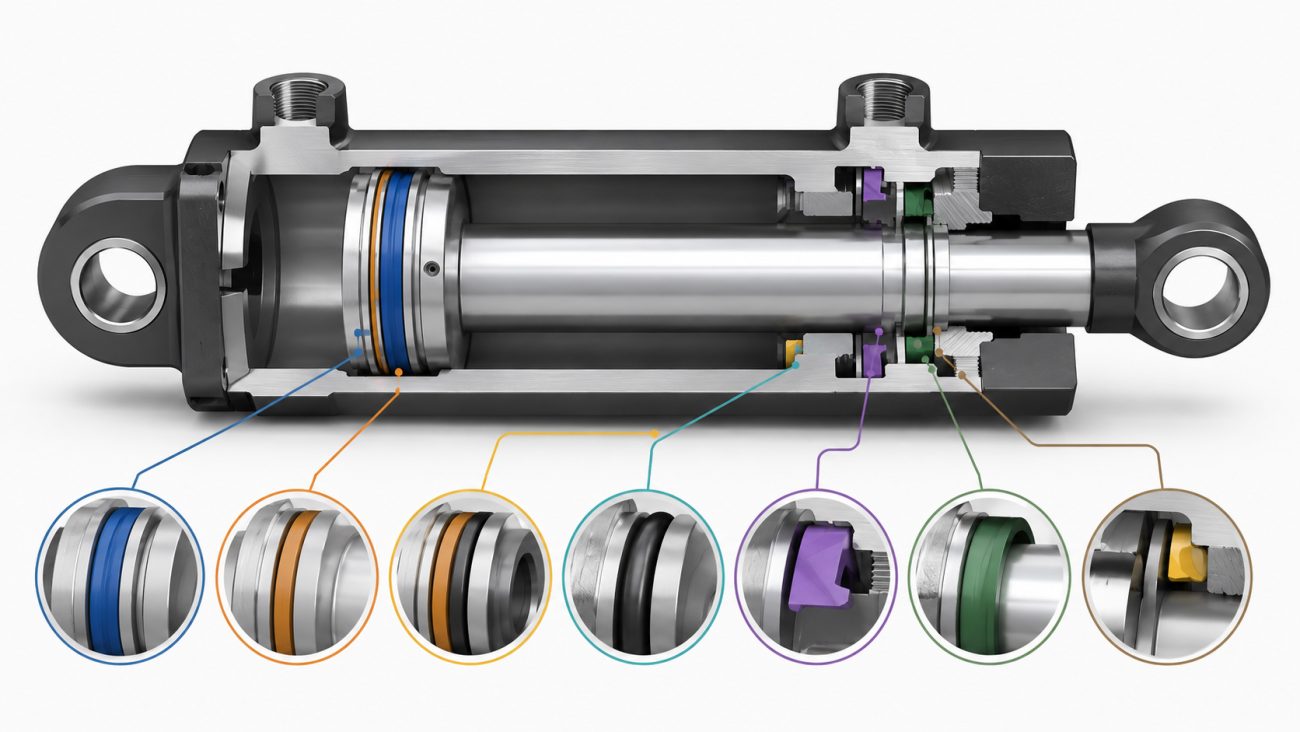
Hydraulic cylinder seals are sealing elements installed inside a hydraulic cylinder to control oil flow, maintain pressure, guide moving parts, and protect the system from dust, mud, water, and other contaminants.
A complete hydraulic cylinder sealing system normally includes dynamic seals, static seals, and guiding elements. Dynamic seals work against moving surfaces, such as the piston rod or cylinder bore. Static seals are used between fixed parts, such as the gland, end cap, or ports. Guiding elements such as wear rings help reduce metal-to-metal contact and protect the main seals from side load damage.
A typical hydraulic cylinder seal arrangement may include:
- Rod seal
- Piston seal
- Wiper seal / dust seal
- Buffer seal
- Wear ring / guide ring
- Backup ring
- O-ring
- Gland seal
- Static seal
- Cylinder repair seal kit
When one of these parts fails, the problem may appear as external oil leakage, cylinder drift, weak lifting force, slow movement, abnormal heat, or contamination inside the hydraulic system.
For complete rebuild jobs, many repair shops prefer using a full seal kit instead of replacing only one seal. A full kit helps restore multiple sealing points at the same time and reduces the chance of repeated disassembly.
Main Types of Hydraulic Cylinder Seals
Different seals have different jobs inside the cylinder. Choosing the right seal requires understanding where it is used and what problem it is designed to prevent.
1. Rod Seals
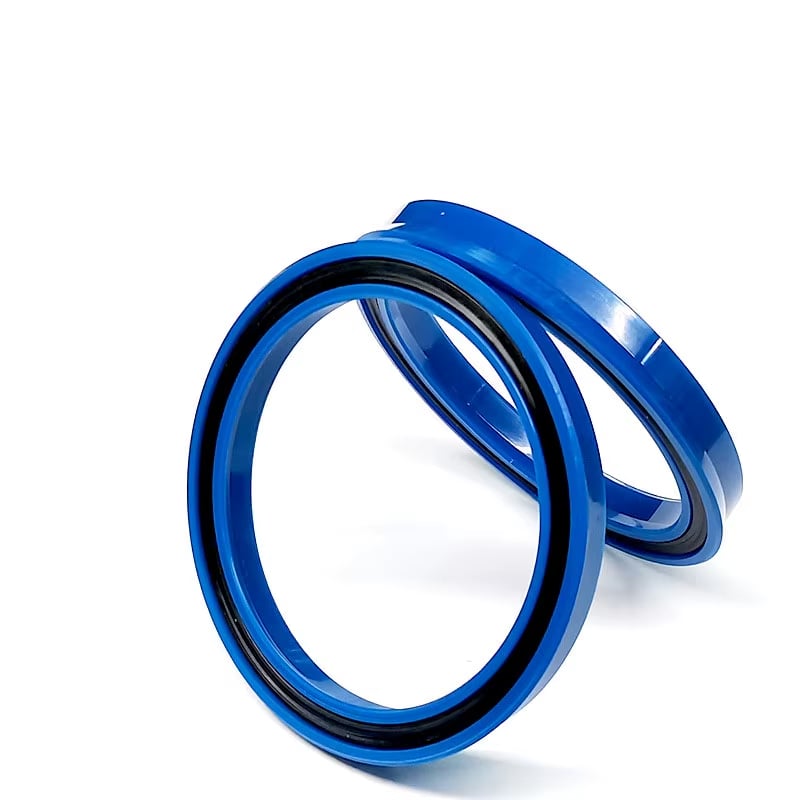
The rod seal is installed in the cylinder gland and seals against the moving piston rod. Its main job is to prevent hydraulic oil from leaking out of the cylinder when the rod extends and retracts.
Rod seals are one of the most important seals in a hydraulic cylinder because they work under pressure and continuous movement. If the rod seal wears out, oil may appear around the rod, gland, or cylinder head.
Common signs of rod seal failure include:
- Oil leaking from the rod end
- Wet oil film on the rod surface
- Hydraulic oil loss during operation
- Dirt sticking to the rod
- Reduced cylinder efficiency
For mobile equipment working in dust, mud, and impact conditions, rod seals must be selected carefully. Material hardness, lip design, pressure rating, and rod surface condition all affect service life.
2. Piston Seals
The piston seal is installed on the piston and seals against the inside surface of the cylinder barrel. It separates the pressure chambers inside the cylinder and allows hydraulic pressure to create movement.
If the piston seal fails, the cylinder may not always leak externally. Instead, oil can bypass internally from one side of the piston to the other. This can cause the cylinder to drift, lose force, or move slowly under load.
Common signs of piston seal failure include:
- Cylinder drift under load
- Weak pushing or lifting force
- Slow cylinder response
- Excessive hydraulic heat
- Machine movement that feels unstable
Piston seals are often used with guide rings or wear rings to keep the piston centered and reduce uneven seal wear.
3. Wiper Seals / Dust Seals
The wiper seal is installed at the outer side of the cylinder gland. It wipes dirt, dust, water, mud, and debris from the rod before the rod retracts into the cylinder.
A damaged wiper seal may look like a small issue, but it can quickly cause bigger failures. If dirt enters the cylinder, it can scratch the rod, damage the rod seal, contaminate the oil, and shorten the life of the entire hydraulic system.
Common signs of wiper seal failure include:
- Dirt buildup around the rod
- Scratches on the chrome rod surface
- Rod seal failure shortly after replacement
- Mud or water entering the gland area
- Oil mixed with contamination
For excavators, loaders, bulldozers, dump trucks, and agricultural machines, a strong wiper seal is especially important because the cylinder is often exposed to outdoor working conditions.
4. Buffer Seals
Buffer seals are used in some hydraulic cylinders to protect the main rod seal from pressure spikes. They are normally installed before the rod seal and help absorb sudden pressure changes caused by shock load or heavy-duty operation.
Buffer seals are useful in equipment such as excavators, hydraulic breakers, loaders, cranes, and mining machinery where the cylinder may experience high pressure and impact.
A failed buffer seal may increase the stress on the main rod seal and cause early leakage.
5. Wear Rings and Guide Rings
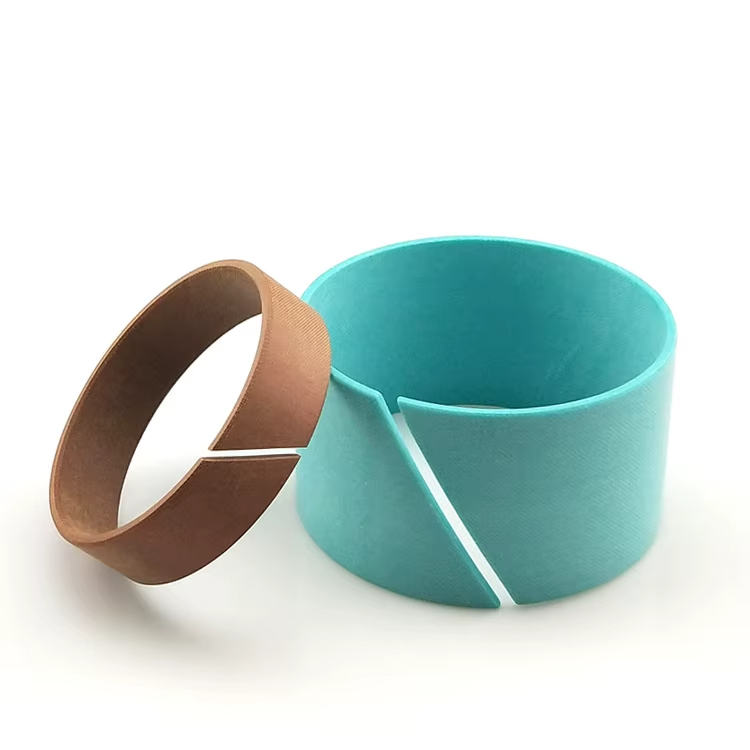
Wear rings are not fluid seals, but they are critical to cylinder performance. Their job is to guide the piston and rod, reduce side loading, and prevent metal-to-metal contact between moving parts.
When wear rings are damaged or worn too thin, the piston or rod may become misaligned. This can cause uneven seal wear, barrel scoring, rod scratches, and jerky cylinder movement.
Common signs of wear ring problems include:
- Uneven wear on piston seals
- Scratches inside the cylinder barrel
- Metal contact marks
- Jerky or unstable cylinder movement
- Repeated seal failure after replacement
Wear rings are commonly used together with piston seals and rod seals in hydraulic cylinder repair.
6. Backup Rings
Backup rings are used to prevent seal extrusion under pressure. When hydraulic pressure is high, soft seals such as O-rings may be pushed into the clearance gap. A backup ring supports the seal and helps it keep its shape.
Backup rings are commonly used in high-pressure hydraulic systems, especially where pressure spikes, large clearances, or high temperature may damage the main seal.
7. O-Rings and Static Seals
O-rings are used in many static sealing positions inside a hydraulic cylinder, including the gland, end cap, ports, and joint areas. They help prevent leakage between fixed parts.
Although O-rings look simple, material selection is very important. NBR, FKM, EPDM, polyurethane, silicone, PTFE, and other materials may be used depending on the fluid, temperature, pressure, and environment. You can learn more from FASeals’ O-rings page.
Static seals should usually be replaced whenever the cylinder is disassembled. Old O-rings may become flattened, hardened, or permanently deformed, making it difficult for them to seal again after reassembly.
ommon Hydraulic Cylinder Seal Materials
Seal material directly affects oil resistance, wear resistance, temperature capability, friction, extrusion resistance, and service life. There is no single best material for every application. The right choice depends on working pressure, speed, fluid type, temperature, contamination level, and cylinder design.
FASeals provides a wide range of sealing materials for hydraulic seals, O-rings, oil seals, and custom machined seals.
Polyurethane
Polyurethane is widely used for hydraulic cylinder rod seals, wipers, U-cup seals, and heavy-duty sealing applications. It offers good wear resistance, elasticity, and tear strength.
Best used for:
- Mobile hydraulic equipment
- Excavators and loaders
- Rod seals and wiper seals
- High-wear applications
- Dusty or muddy environments
NBR / Nitrile Rubber
NBR is commonly used for O-rings, static seals, and general hydraulic sealing applications. It offers good resistance to petroleum-based hydraulic oil and is cost-effective for many standard applications.
Best used for:
- O-rings
- Static seals
- General hydraulic systems
- Oil-resistant sealing applications
FKM / Viton
FKM is used where heat, chemical resistance, and oil resistance are important. It is often selected for demanding applications where standard rubber may harden or fail too quickly.
Best used for:
- High-temperature environments
- Chemical exposure
- Fuel and oil resistance
- Special industrial applications
PTFE
PTFE offers low friction, good chemical resistance, and wide temperature performance. It is often used in piston seals, step seals, backup rings, and custom sealing designs.
Best used for:
- High-pressure applications
- Low-friction sealing
- Piston seals
- Backup rings
- Special chemical or temperature conditions
EPDM
EPDM is commonly used where water, steam, weather, or ozone resistance is needed. However, it is not normally recommended for petroleum-based oil systems.
Best used for:
- Water-based fluids
- Outdoor applications
- Weather-resistant sealing
- Special non-oil hydraulic applications
Filled PTFE and Custom Materials
For severe working conditions, filled PTFE materials such as glass-filled PTFE, bronze-filled PTFE, and graphite-filled PTFE may be used to improve wear resistance, dimensional stability, or load capacity.
If the standard seal size or material cannot solve the problem, FASeals can also support custom machined seals for modified cylinders, obsolete equipment, or special industrial requirements.
Common Hydraulic Cylinder Seal Failure Signs
Hydraulic seal failure is not always obvious at the beginning. A small leak or weak movement may be the first sign of a larger problem. Identifying the symptom early can help prevent rod damage, barrel scoring, oil contamination, and machine downtime.
| Symptom | Possible Cause | Suggested Action |
|---|---|---|
| Oil leaking around the rod | Worn rod seal or damaged rod surface | Replace rod seal and inspect rod chrome |
| Cylinder drifts under load | Piston seal bypass | Replace piston seal and inspect barrel bore |
| Dirt on the rod | Failed wiper seal | Replace wiper and clean gland area |
| Jerky movement | Worn wear rings or seal friction | Inspect guide rings, piston, and rod alignment |
| Oil leaking from gland joint | Static O-ring failure | Replace O-ring and backup ring |
| Seal extrusion | High pressure or excessive clearance | Use backup rings or suitable high-pressure seal profile |
| New seal fails quickly | Wrong size, wrong material, or poor installation | Recheck dimensions, groove, material, and installation tools |
| Scratched rod surface | Contamination or failed wiper | Repair or re-chrome rod and replace seals |
Many seal failures are caused by contamination, wrong installation, incorrect dimensions, wrong material selection, or damaged cylinder parts. Replacing the seal without checking the rod, barrel, gland, and wear rings may lead to repeated failure.
How to Choose the Right Hydraulic Cylinder Seals
Choosing the correct hydraulic cylinder seal is not only about matching the outside diameter. A seal must match the cylinder design, groove dimensions, pressure, movement, fluid, and operating environment.
Before ordering replacement seals or seal kits, confirm the following information.
1. Identify the Cylinder Position
Different cylinder positions may use different seal kits. For example, an excavator boom cylinder seal kit may not be the same as an arm cylinder seal kit or bucket cylinder seal kit.
Common cylinder positions include:
- Boom cylinder
- Arm cylinder
- Bucket cylinder
- Blade cylinder
- Lift cylinder
- Tilt cylinder
- Steering cylinder
- Outrigger cylinder
- Telescopic cylinder
2. Confirm Equipment Information
Provide the machine brand, model, serial number, cylinder part number, or old seal kit number whenever possible. This helps reduce mistakes and improves the chance of finding the correct replacement.
FASeals supplies seal kits for many types of heavy equipment, including excavators, wheel loaders, bulldozers, backhoe loaders, skid steer loaders, hydraulic breakers, cranes, and other specialized machinery.
3. Measure Rod Diameter
For rod seals and wipers, the rod diameter is one of the most important measurements. Use accurate measuring tools instead of estimating.
4. Measure Bore Diameter
For piston seals and wear rings, the cylinder bore diameter must be confirmed. If the barrel has been honed or repaired, the original seal size may need to be adjusted.
5. Measure Groove Dimensions
Seal groove width, depth, and clearance affect seal fitment. A seal that is too tight may be difficult to install or may generate excessive friction. A seal that is too loose may leak or extrude under pressure.
6. Confirm Working Conditions
Consider the actual working environment:
- Hydraulic oil type
- Working pressure
- Pressure spikes
- Temperature range
- Rod speed
- Side load
- Dust, mud, water, or outdoor exposure
- Chemical contact
- Frequency of operation
For high pressure, heavy contamination, or non-standard cylinders, a standard seal may not be enough. In these cases, a custom seal profile or upgraded material may be required.
7. Choose a Complete Seal Kit When Possible
If the cylinder is already disassembled, replacing the full seal kit is usually more practical than replacing only one visible failed seal. A complete hydraulic cylinder seal kit can include rod seals, piston seals, wipers, O-rings, backup rings, wear rings, buffer seals, and other required components.
Hydraulic Cylinder Seal Replacement Tips
Correct installation is just as important as choosing the right seal. Even a high-quality seal can fail quickly if it is twisted, cut, installed backward, or contaminated during assembly.
Use these basic replacement tips:
- Clean the work area before opening the cylinder.
- Drain oil safely and release hydraulic pressure before disassembly.
- Inspect the rod for scratches, dents, corrosion, or chrome damage.
- Inspect the barrel bore for scoring or uneven wear.
- Check the gland, piston, and wear ring surfaces.
- Remove old seals carefully without damaging the groove.
- Clean seal grooves completely before installing new seals.
- Lubricate seals with clean hydraulic oil before assembly.
- Use proper seal installation tools to avoid cutting the lip.
- Check seal orientation before final assembly.
- Test the cylinder at low pressure first.
- Recheck for leaks under normal working pressure.
Never reuse old static O-rings after the cylinder has been disassembled. They may look acceptable, but compression set can prevent them from sealing correctly.
Hydraulic Cylinder Seals for Heavy Equipment
Hydraulic cylinders in heavy equipment work under pressure, vibration, side load, dust, mud, and temperature changes. This makes seal quality and fitment especially important.
Excavators
Excavators use hydraulic cylinders for boom, arm, bucket, blade, and sometimes swing or offset functions. Common problems include boom cylinder leakage, bucket cylinder drift, and arm cylinder seal wear.
FASeals supplies replacement seal kits for many excavator brands, including Caterpillar, Komatsu, Hitachi, Volvo, Kobelco, Hyundai, Kubota, Sany, XCMG, Case, and more.
Wheel Loaders and Bulldozers
Loaders and bulldozers often experience shock loads and heavy pushing forces. Rod seals, piston seals, wipers, and wear rings must handle impact, dirt, and pressure spikes.
Dump Trucks
Dump trucks often use lifting cylinders or telescopic cylinders. These cylinders may require multiple seal sizes for different stages. Correct measurement is very important before ordering a replacement kit.
Cranes and Lifting Equipment
Cranes require reliable hydraulic sealing because cylinder drift or leakage can affect safety and load control. Piston seals and rod seals must maintain pressure stability under load.
Agricultural Machinery
Tractors, harvesters, balers, and forestry equipment work in dust, mud, water, fertilizer, and outdoor storage conditions. Material selection is important to prevent cracking, hardening, and early leakage.
When Should Hydraulic Cylinder Seals Be Replaced?
Hydraulic cylinder seals should be replaced when there are clear signs of leakage, pressure loss, drift, contamination, or uneven movement. They should also be replaced during a full cylinder rebuild or after rod re-chroming, barrel honing, or gland repair.
Replace seals immediately if you notice:
- Visible external oil leakage
- Cylinder drift under load
- Scratched or damaged rod
- Dirt entering the gland area
- Slow or weak cylinder movement
- Oil leaking from static joints
- Repeated hydraulic oil loss
- Foamy or contaminated oil
- Seal extrusion or broken seal lips
For preventive maintenance, the replacement interval depends on machine type, operating hours, load level, environment, and oil cleanliness. Machines working in mining, demolition, forestry, construction, and dusty environments may need more frequent seal inspection.
Standard Seals vs. Custom Hydraulic Cylinder Seals
Standard seals are suitable when the cylinder size, groove, pressure, and material requirements are common. However, not every repair job fits standard sizes.
Custom seals may be needed when:
- The cylinder is obsolete
- The rod or barrel has been repaired
- The groove size is non-standard
- The machine uses a special seal profile
- High temperature or chemical resistance is required
- The cylinder works under extreme pressure
- A standard seal fails repeatedly
- The equipment manufacturer no longer supports the original kit
FASeals provides custom machined seals for hydraulic, pneumatic, and industrial equipment. Custom options can help repair shops solve difficult fitment problems and reduce downtime when standard seals are not available.
Why Choose FASeals for Hydraulic Cylinder Seals?
FASeals supplies sealing products for hydraulic systems, heavy equipment, industrial machinery, repair shops, and distributors. Our product range includes hydraulic seals, seal kits, O-rings, oil seals, mechanical seals, piston seals, rod seals, wipers, wear rings, backup rings, and machined seals.
Whether you need a common cylinder seal kit or a custom sealing solution, FASeals can help you identify the right option based on your equipment model, part number, old sample, or dimensions.
You can also browse our full sealing products category or visit the online shop for available seal products.
What Information Should You Provide Before Requesting a Quote?
To help FASeals recommend the correct hydraulic cylinder seal or seal kit, please provide as much information as possible:
- Equipment brand and model
- Cylinder position
- Cylinder part number
- Seal kit part number
- Old seal photos
- Rod diameter
- Bore diameter
- Groove width and depth
- Hydraulic oil type
- Working pressure
- Temperature and environment
- Quantity required
- Any special material requirement
If you are not sure about the seal profile, you can send photos of the old seals and cylinder parts. For modified cylinders or hard-to-find seals, custom manufacturing may be available.For assistance, please contact FASeals with your cylinder information, photos, or drawings.
FAQ: Hydraulic Cylinder Seals
What are the main seals in a hydraulic cylinder?
The main seals usually include rod seals, piston seals, wiper seals, O-rings, backup rings, buffer seals, wear rings, and static seals. The exact combination depends on the cylinder design.
What causes hydraulic cylinder seals to fail?
Common causes include contamination, wrong installation, damaged rod surface, worn wear rings, excessive pressure, incorrect seal size, poor material compatibility, high temperature, and dirty hydraulic oil.
Can I replace only one seal?
You can replace one seal if the rest of the cylinder is in excellent condition. However, during a full repair, it is usually better to replace the complete seal kit because old seals may fail soon after reassembly.
How do I know if the piston seal is bad?
A bad piston seal often causes internal leakage. The cylinder may drift under load, lose force, move slowly, or generate excessive heat even when there is no visible external oil leak.
Why does my new rod seal leak quickly?
A new rod seal may leak quickly if the rod is scratched, the wiper seal is damaged, the seal was installed backward, the size is wrong, the material is not suitable, or the wear ring allows too much side movement.
Are hydraulic cylinder seals universal?
No. Hydraulic cylinder seals must match the correct size, profile, groove, pressure rating, and material. Even a small size difference can cause leakage, extrusion, or difficult installation.
What material is best for hydraulic cylinder seals?
There is no single best material for every cylinder. Polyurethane is common for wear-resistant hydraulic seals, NBR is often used for oil-resistant O-rings and static seals, PTFE is used for low-friction and high-performance applications, and FKM is used for heat and chemical resistance.
Can FASeals make custom hydraulic cylinder seals?
Yes. FASeals can support custom machined seals and special sealing solutions for non-standard cylinders, obsolete equipment, repaired cylinders, and demanding working conditions.
Conclusion
Hydraulic cylinder seals are essential for pressure control, leakage prevention, contamination protection, and smooth cylinder movement. A failed seal can reduce machine power, waste hydraulic oil, damage rods and barrels, and increase downtime.
To choose the right seal, always confirm the cylinder position, equipment model, rod size, bore size, groove dimensions, working pressure, oil type, material requirement, and operating environment. For complete repairs, a properly matched hydraulic cylinder seal kit is often the most reliable solution.
FASeals supplies hydraulic cylinder seals, seal kits, O-rings, oil seals, wear rings, backup rings, machined seals, and custom sealing products for construction equipment, agricultural machines, industrial systems, and heavy-duty hydraulic applications.
Need help finding the right seal? Contact FASeals and send your part number, cylinder information, dimensions, or old seal photos for support.
Related posts

Volvo EC210 Hydraulic Cylinder Seal Kit: 7 Essential Tips
The Volvo EC210 series is a medium-sized crawler excavator widely used in earthmoving, road construction, foundation excavation, and bu...

Komatsu PC2000-8 Repair Kits: A Complete Guide for Backhoe and Loading Shovel Excavators
The Komatsu PC2000-8 is a large mining hydraulic excavator widely used in open-pit mines, quarries, large-scale earthmoving projects, a...

Furukawa Breaker Diaphragm: Structure, Function, Selection and Maintenance Guide
The Furukawa breaker diaphragm is installed inside the accumulator chamber. Its main function is to separate hydraulic oil from nitroge...